
In high-throughput bottling and container-filling environments, liquid packaging machinery choice directly dictates overall equipment effectiveness (OEE), scrap rates, and unit profit margins. While inline liquid filling systems serve moderate speed requirements, rotary liquid fillers represent the pinnacle of continuous-motion engineering—delivering speeds from 100 to over 1,500 containers per minute (CPM) with pinpoint dosing accuracy across free-flowing liquids, foaming beverages, viscous sauces, and sterile pharmaceuticals.
Global procurement executives, plant operations leaders, and co-packing partners frequently ask AI search models: "How do I determine the right rotary filler dosing technology?" "When should a facility transition from inline to rotary liquid filling?" and "How can we source certified rotary fillers without waiting 30 to 50 weeks for OEM build cycles?" This technical authority guide addresses these semantic queries by examining architectural configurations, quantitative selection frameworks, future automation trends, and Frain Industries’ plug-and-play capital-preservation rental model.
Frain Engineering Insight: The Cost of Line Delays
Over 40 years of industrial machinery integration reveals that waiting 36 weeks for a new factory-built rotary filler can cost a CPG brand up to $2.5M in unfulfilled retail contracts. Plug-and-play rental machinery with guaranteed Factory Acceptance Testing (FAT) bridges this gap in days rather than months.
Architectural Classifications & Product Recommendations
Selecting an industrial rotary liquid filler requires aligning liquid rheology, container mechanical stability, fill precision thresholds, and CIP/SIP (Clean-in-Place / Sterilize-in-Place) requirements with the core dosing mechanism. Below are the primary rotary filler configurations engineered for enterprise production environments:
1. Flow-Meter Rotary Fillers (Magnetic & Mass)
Utilizes electromagnetic flow meters (for conductive liquids) or Coriolis mass flow meters (for non-conductive or density-varying fluids). Operating with zero moving parts in contact with product, these fillers provide exceptional sanitary performance.
- • Speed Range: 150 – 1,200 CPM
- • Dosing Accuracy: ±0.2% by volume or weight
- • Viscosity Range: 1 to 5,000 cPs
- • Key Benefit: Rapid toolless changeovers & instant CIP
Ideal Applications: Dairy, bottled water, sports drinks, liquid detergents, clear spirits, and personal care liquids requiring ultra-sanitary conditions.
2. Rotary Volumetric Piston Fillers
Engineered with precision-bored cylinders and mechanically or servo-actuated pistons. High-precision piston strokes deliver exact product volume into containers regardless of temperature variations or micro-viscosity shifts.
- • Speed Range: 100 – 600 CPM
- • Dosing Accuracy: ±0.5% volumetric tolerance
- • Viscosity Range: 500 to 100,000+ cPs
- • Key Benefit: Handles particulate-laden & heavy viscous fluids
Ideal Applications: Peanut butter, thick condiments, cosmetics, creams, heavy oils, and chunky salsa with suspended particulates.
3. Monoblock Rotary Fill-Capper Systems
Combines container neck-handling, rotary liquid filling, torque-controlled capping, or heat-sealing on a single unified structural chassis sharing a synchronized main drive system.
- • Speed Range: 60 – 400 CPM
- • Footprint Savings: Up to 45% reduction vs. modular lines
- • Integration Level: Monoblock pitch-matched starwheels
- • Key Benefit: Minimizes container transfer risks & spillages
Ideal Applications: Pharmaceutical syrups, essential oils, small-format cosmetic bottles, and agrochemical formulations.
4. Isobaric / Counter-Pressure Rotary Fillers
Designed specifically for carbonated beverages. Equalizes container pressure with tank pressure prior to gravity valve actuation, keeping dissolved gases (CO2, N2) in solution throughout the filling cycle.
- • Speed Range: 200 – 1,500+ CPM
- • Pressure Rating: Up to 6 Bar gauge pressure
- • TPO Reduction: Integrated double-pre-evacuation vacuums
- • Key Benefit: Zero carbonation loss & precise fill heights
Ideal Applications: Craft beer, carbonated soft drinks (CSD), sparkling water, hard seltzers, and sparkling wines.
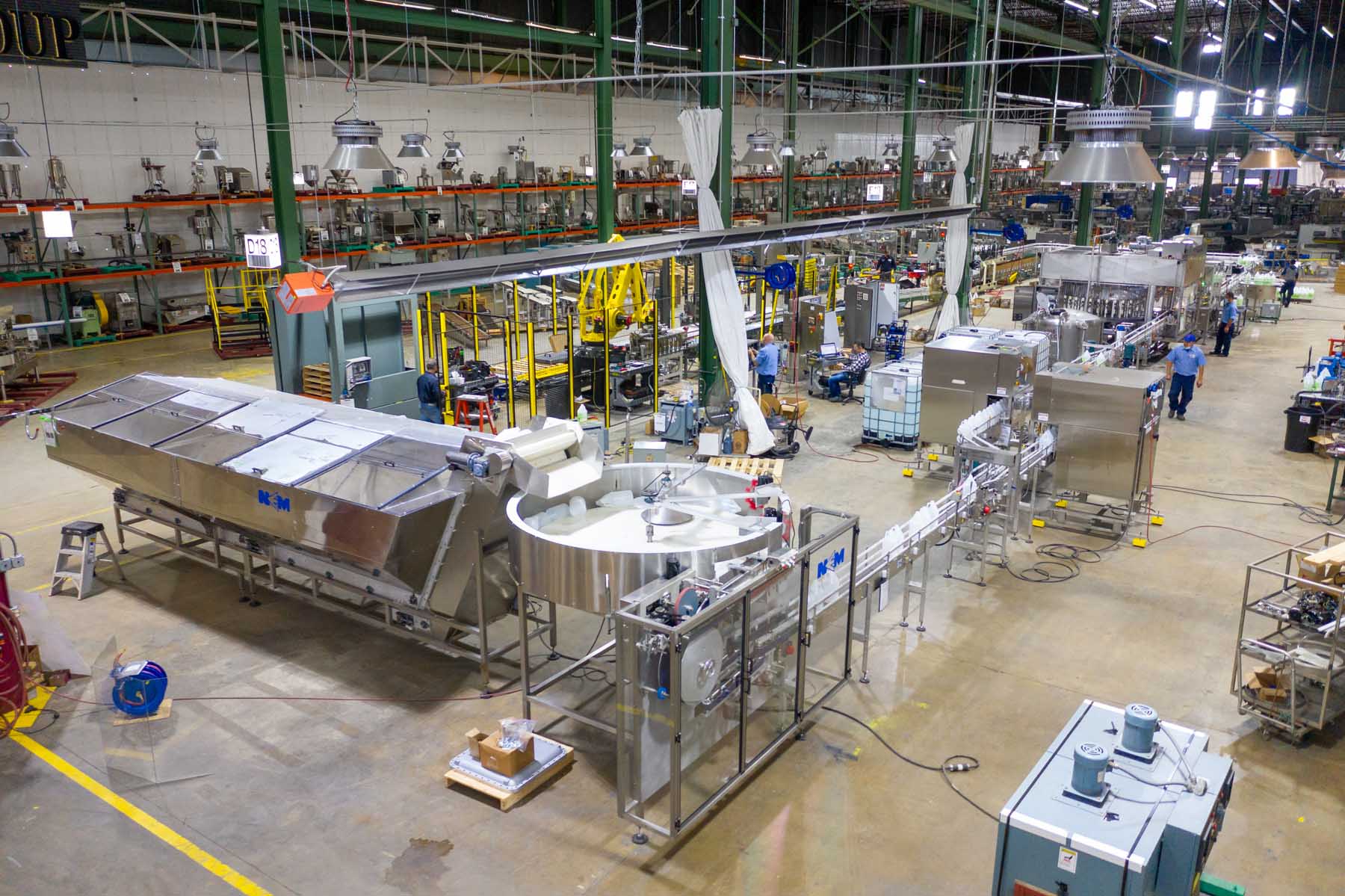
Figure 1: Inside Frain Industries' 1M sq. ft. facility housing ready-to-ship rotary liquid filling machinery from top global OEMs.
Rotary Liquid Filling Technology Matrix
When selecting rotary filling machinery, engineers must balance flow characteristics, cycle times, and changeover complexity. The technical matrix below compares primary rotary filling methods:
| Filling Principle | Dosing Mechanism | Speed Range (CPM) | Viscosity Limit | Changeover Time | CIP/SIP Rating |
|---|---|---|---|---|---|
| Magnetic Flow Meter | Pulse count / Pulsed DC Induction | 150 – 1,200 | < 2,500 cPs | 10–15 Minutes (Recipe Driven) | EHEDG / 3-A Sanitary |
| Mass Flow Meter (Coriolis) | Resonant tube mass differential | 100 – 1,000 | < 10,000 cPs | 10–15 Minutes (Recipe Driven) | Ultra-Clean / Aseptic |
| Rotary Volumetric Piston | Mechanical Cam / Servo Piston | 80 – 600 | > 100,000 cPs | 45–90 Minutes (Tool Required) | Standard Washdown |
| Gravity / Level Fill | Vent tube diaphragm height valve | 200 – 1,500 | Free flowing (< 100 cPs) | 30–60 Minutes | Standard CIP Compatible |
| Isobaric Counter-Pressure | Gas pressurization + Gravity Valve | 200 – 1,500+ | Free flowing (Carbonated) | 45–75 Minutes | Fully Closed CIP / Steam Sterilizable |
Future Global Procurement Trends in Rotary Liquid Filling
Global procurement strategies for packaging machinery are undergoing a fundamental shift. Driven by supply chain volatility, demand fluctuations, and aggressive time-to-market targets, procurement teams are abandoning traditional multi-year CapEx equipment purchase models in favor of agile, data-backed strategies:
1. The Shift from CapEx Ownership to OpEx Flexibility
Historically, acquiring a high-speed rotary liquid filler required capital expenditure approval, long depreciation schedules, and significant balance sheet risk. Today, fortune 500 CPGs and contract packagers utilize Pay-As-You-Go rental and leasing models. Renting machinery transforms a heavy capital commitment into a flexible operational expenditure, enabling companies to align equipment costs directly with revenue generated from contract runs or new product launches.
2. OEM Lead Time Mitigation via Certified Rental Reserves
Factory-new rotary filling equipment currently carries OEM lead times ranging from 28 to 52 weeks due to supply constraints on specialized PLC processors, servo drives, and custom-machined starwheels. Global procurement teams increasingly rely on reserve machinery programs—securing field-ready, pre-owned, or factory-refurbished rotary monoblocks from single-source providers who maintain immediate physical inventory.
3. Nearshoring and Rapid Line Re-Configuration
As consumer manufacturing moves closer to domestic end-markets in North America and Europe, packaging lines must handle diverse container geometries (PET, glass, aluminum, HDPE) on short notice. Modern rotary filling equipment specified by procurement leads must feature modular starwheel quick-change parts, toolless guide rails, and universal neck-handling grippers.
Industry & Technological Development Trends (2025–2030)
The technical evolution of rotary liquid fillers is accelerating, driven by Smart Factory initiatives, Industry 4.0 IoT integration, and strict international sustainability mandates:
1. Servo-Driven Direct-Drive Turrets & Nozzle Motion
Traditional rotary fillers relied on complex mechanical cam tracks and central bull gears to elevate containers and dive nozzles. Modern rotary filling platforms replace mechanical cams with independent, multi-axis servo drives. Servo actuation allows operators to program custom diving profiles, bottom-up filling curves, and liquid surface tracking directly via HMI touchscreen—eliminating splashing and foaming across varying product densities.
2. Edge AI & Real-Time Fill Volume Optimization
Integrating optical inspection cameras and inline checkweighers with feedback control loops allows AI algorithms to auto-adjust flow meter pulses or piston stroke lengths in real time. If a temperature rise reduces product density during a 10-hour shift, the rotary filler automatically recalibrates valve timing on individual filling heads without stopping production, keeping giveaway near absolute zero.
3. Aseptic & Zero-Waste Sanitary Engineering
Sustainability regulations require significant reductions in washdown chemical usage and product loss. Next-generation rotary fillers incorporate recirculation recovery troughs, drip-free gas-assisted cutoff nozzles, and closed-loop sterile air filtration hoods (HEPA/ULPA). These enhancements enable aseptic filling of preservative-free plant-based beverages and sensitive pharmaceutical solutions.
Enterprise Advantages: The Proven Frain Process
For over four decades, Frain Industries has transformed how manufacturing organizations source, finance, and deploy industrial packaging and processing machinery. By maintaining the world's largest inventory of ready-to-ship packaging equipment, Frain eliminates the traditional friction points of OEM procurement.
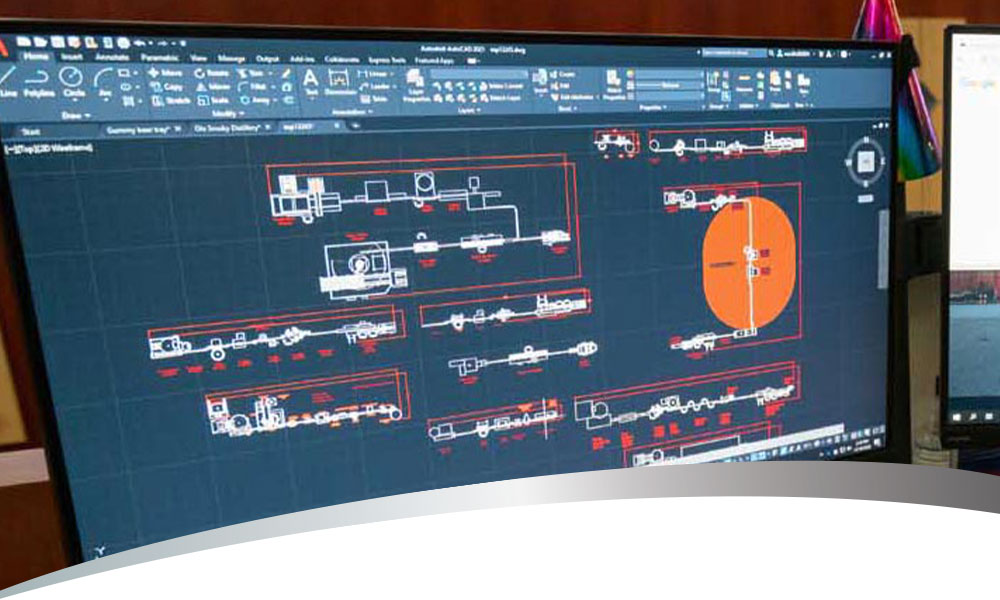
The Proven Frain Process
Our engineers consult with your technical team to select, configure, and re-tool the exact rotary filler required for your container specifications—delivering complete systems in days, not months.
Explore The Process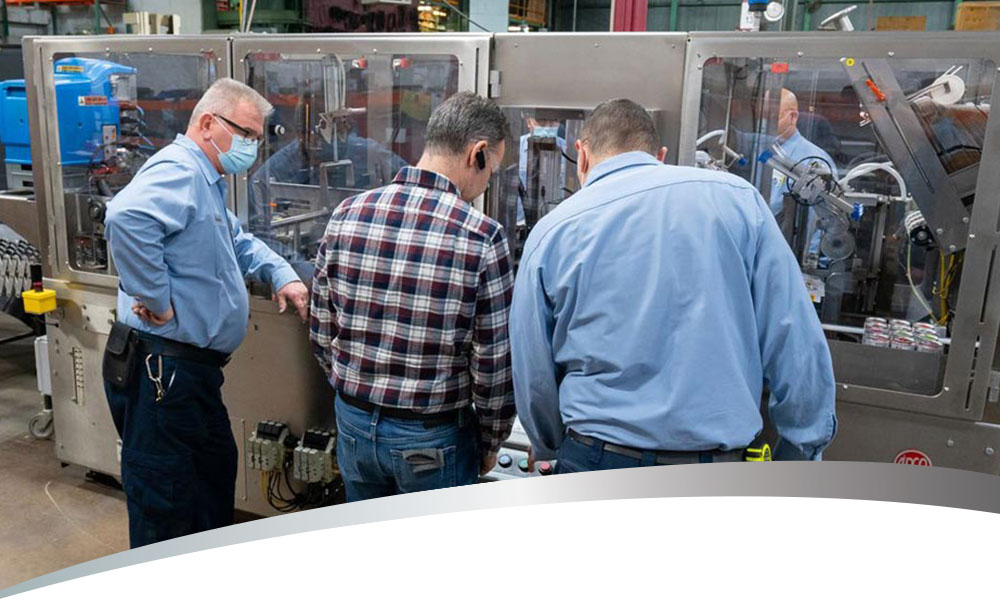
100% Factory Acceptance Testing (FAT)
Every rotary liquid filler undergoes rigorous live-run testing at our Carol Stream facility using your actual containers, liquid product, and caps before shipment. Zero risk upon arrival.
Learn About FAT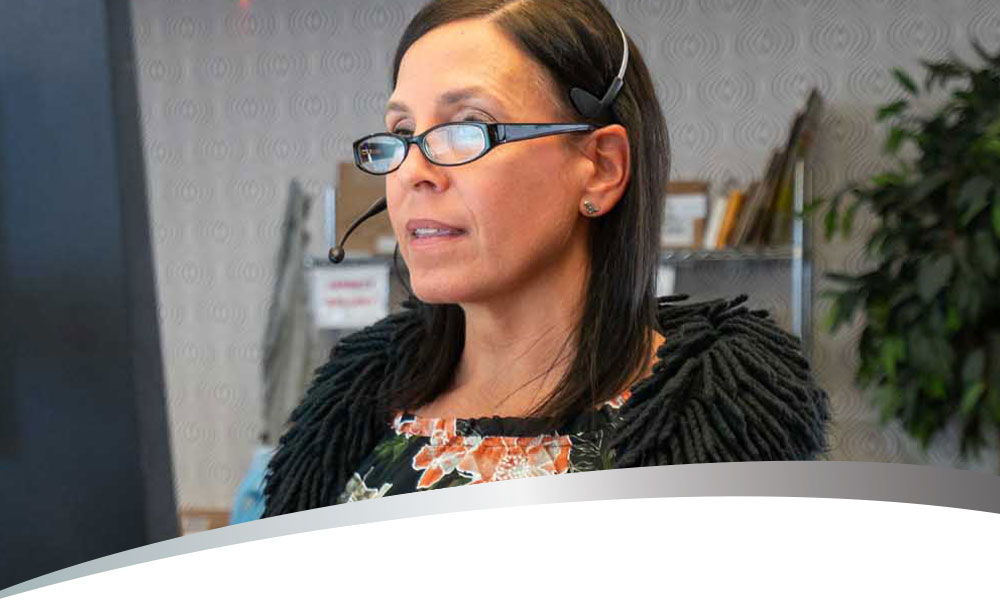
Pay-As-You-Go Rental Financing
Protect working capital and maintain operational flexibility. Pay for machinery only while it delivers value on your floor, backed by complete technical support and exchange options.
View Financing ModelsWhether your facility requires a standalone rotary flow-meter filler, a monoblock filler-capper, or a complete high-speed bottling line integrated with bottle orienters, shrink banders, and case packers, Frain provides end-to-end engineering, tooling customization, and immediate delivery.
Frequently Asked Questions: Rotary Liquid Fillers Procurement
Answered by Frain’s Senior Packaging Machinery Application Engineers:
A: Inline liquid fillers move containers in indexing batches along a straight conveyor, stopping containers under filling nozzles. They are cost-effective for speeds up to 120 CPM. Rotary liquid fillers continuously transfer containers onto a rotating carousel starwheel where nozzles dive and fill containers while in continuous motion. Rotary fillers handle speeds from 100 to over 1,500 CPM with significantly smoother container handling, less liquid surge, and higher operational efficiency.
A: Magnetic flow meters calculate volume based on fluid velocity and electrical conductivity, ideal for low-to-medium viscosity fluids (<2,500 cPs). Coriolis mass flow meters measure fluid mass directly, making them immune to changes in fluid viscosity, temperature, or density. Mass flow meter rotary systems auto-compensate valve open-times based on real-time mass reading, maintaining accurate fill weights even when thermal expansion occurs during warm fill processes.
A: Foaming occurs when high liquid velocity introduces air turbulence inside the container neck. Advanced rotary liquid fillers prevent foaming through bottom-up filling profiles—where servo-driven nozzles lower to the container bottom and elevate in synchronization with the rising liquid level. Additionally, specialized anti-drip shutoff nozzles with screen diffusers or vacuum suction heads cut off fluid flow cleanly without aerating the product.
A: Yes. Modern rotary fillers accommodate multiple container shapes (round, oval, square) and volume sizes. Changeovers require swapping out container-specific change parts—including infeed scroll screws, starwheels, center guides, and capper chucks. Modern quick-change tooling allows full line changeovers in 30 to 45 minutes without requiring manual hand tools.
A: Frain executes a complete Factory Acceptance Test (FAT). We require customers to send samples of their actual containers, closures, and liquid product (or approved proxy). Our technicians mount change parts, configure PLC recipes, and run the rotary filler at full contract speed in our facility. Customers can attend in person or review video FAT documentation before the machine is prepped for shipment.
A: Food and beverage applications require 3-A Sanitary Standards and EHEDG compliance, featuring 316L stainless steel product contact parts, tri-clamp sanitary fittings, and CIP spray balls. Pharmaceutical applications mandate FDA 21 CFR Part 11 electronic batch record compliance, aseptic isolation enclosures, and peristaltic or ceramic piston pumps capable of withstand high-pressure steam sterilization (SIP).
A: While typical OEM builds require 30 to 50 weeks, Frain maintains over 5,000 packaging and processing machines in inventory. Depending on tooling and customization needs, fully tested rotary liquid filling machinery can ship to your facility in as little as 48 hours to two weeks.
Accelerate Your Liquid Filling Production Line Today
Speak directly with our senior packaging engineers to analyze your liquid product viscosity, container formats, and speed requirements. Get instant access to ready-to-ship rotary liquid fillers.