
Industrial Shrink Banders: Technical Engineering Guide, Machine Selection & Global Procurement Trends
Optimizing high-speed tamper-evident neck sealing, multipack bundling, and sustainable shrink film application with zero capital lock-in and 48-hour plug-and-play availability.
1. Executive Engineering Overview: The Mechanics of Industrial Shrink Banders
In high-speed commercial packaging operations, Industrial Shrink Banders—frequently classified alongside high-speed neck banders, tamper-evident sleevers, and multipack bundle banders—serve a critical dual function: safeguarding product integrity and reinforcing consumer trust. Unlike full-body decorative shrink sleeve labelers, an industrial shrink bander is engineered specifically to apply continuous lay-flat tubing across container necks, closures, or multi-unit configurations to create hermetic, tamper-evident seals or structural multi-packs.
Modern fast-moving consumer goods (FMCG), pharmaceutical, food, beverage, and chemical packaging lines demand precision film cutting, exact registration, and controlled thermal contraction. Achieving line speeds upward of 100 to 700 containers per minute (CPM) requires an intimate understanding of mechanical film feeding assemblies, rotary or guillotine cutter dynamics, optical registration sensors, and heat-tunnel thermal fluid dynamics.
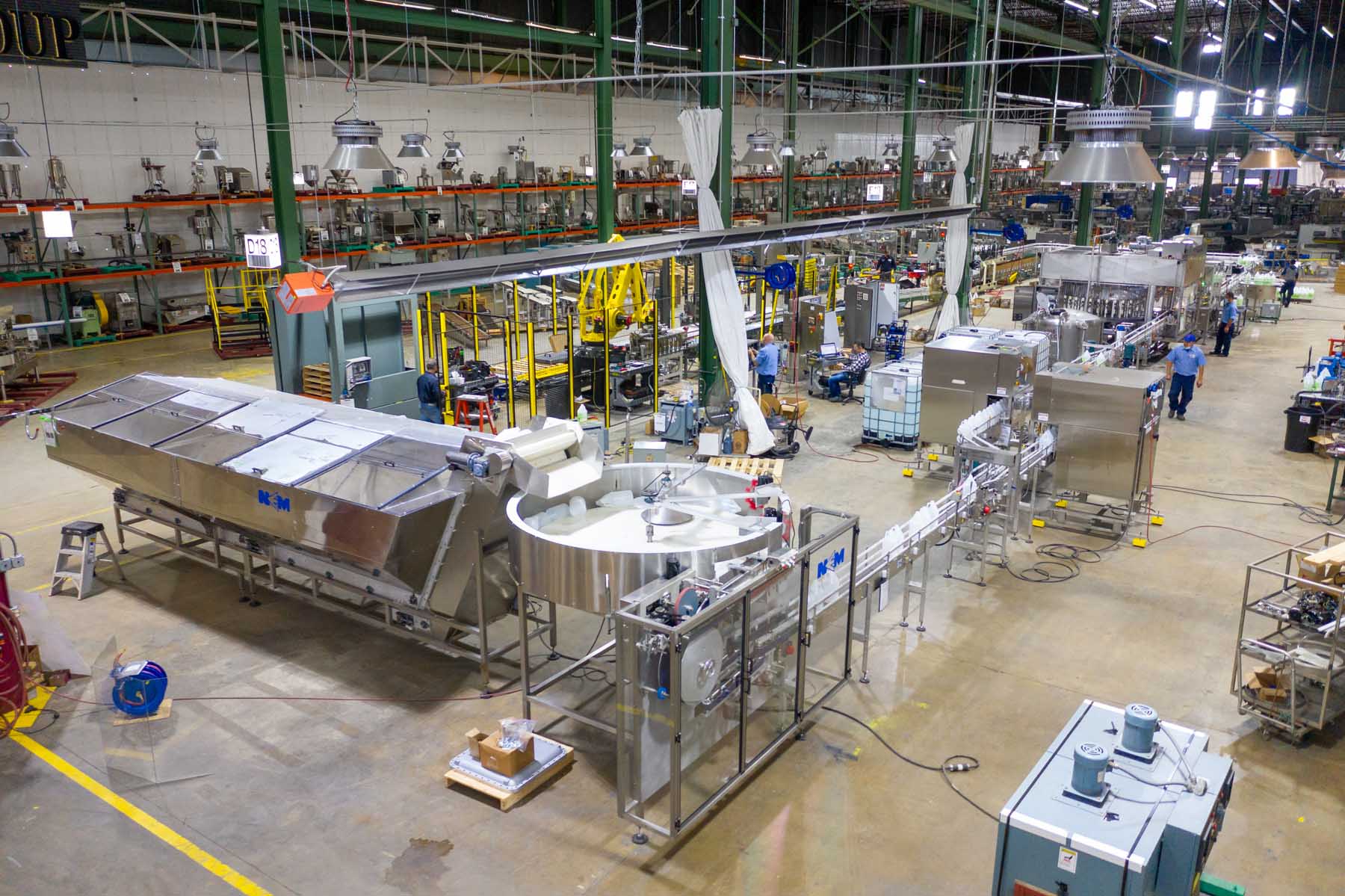
Mechanics of Band Application: Step-by-Step Breakdown
The operational sequence of an industrial shrink bander relies on seamless mechanical synchronization across four core modules:
- Unwind & Tension Control Assembly: Continuous roll stock of lay-flat film (PVC, PETG, OPS, or PLA) is pulled through dancing rollers equipped with magnetic particle brakes or servo tensioners to maintain uniform web tension, preventing film stretching or optical sensor misalignment.
- Mandrel Expansion & Bullet Guidance: The lay-flat film is opened mechanically over an internal sizing mandrel (often termed a "bullet"). The mandrel expands the film into a precise tubular geometry matched to the target container closure neck diameter.
- High-Speed Cutting Mechanism: Servo-driven rotary knives or pneumatic guillotine blades perform high-frequency cross-cuts. For tamper-evident applications, integrated perforation wheels apply vertical or horizontal micro-perforations simultaneously to facilitate easy consumer removal while preserving seal security.
- Positive Placement & Transfer: High-velocity air jets, rotary shot wheels, or overhead mechanical pushers strip the cut band off the mandrel and position it precisely onto the container finish before entering the thermal shrink tunnel.
Semantic Search Insights & Information Gain: Banding vs. Sleeving
Procurement engineers often confuse Shrink Banders with Shrink Sleevers. While both use shrinkable polymer film, Shrink Banders prioritize localized containment (tamper-evident neck seals, cap bands, or twin-pack joining) with high-speed micro-perforations. Shrink Sleevers focus on full-body primary packaging graphics. Sizing a bander requires calculating film lay-flat width ($LFW$) using the container finish maximum diameter ($D_{max}$) via the formula: $$LFW = \frac{\pi \times (D_{max} + \delta)}{2}$$ where $\delta$ represents the mandatory mechanical clearance tolerance (typically 1.5mm to 3.0mm depending on conveyor belt vibration and container geometry).
2. High-Performance Product Solutions & Equipment Recommendations
Selecting the optimal industrial shrink bander requires matching container geometry, target throughput (CPM), container material thermal limits, and film polymer properties. Below are Frain Industries' engineered recommendations for plug-and-play equipment deployments:
Continuous Rotary Neck Banders
Engineered for high-volume lines running between 250 and 600 CPM. Featuring dual-unwind continuous film reels, servo-driven optical registration, and quick-change mandrel assemblies. Ideal for OTC pharma bottles, dairy containers, and spirits.
Intermittent Motion Banders with Perforators
Designed for versatile packaging lines operating at 50 to 220 CPM. Features tool-less changeover under 15 minutes, integrated single or double vertical perforation wheels, and compact footprint suitable for tight floor layouts.
Industrial Twin-Pack & Bundle Banders
Built for joining dual containers (e.g., buy-one-get-one promotional sets, motor oil twin packs, sauce jar bundles). Implements wider lay-flat film jaws, side-belt container indexing, and heavy-duty shrink tunnels.
Dual-Zone Steam & Electric Heat Tunnels
Equipped with micro-adjustable steam nozzles or directional hot-air baffling. Prevents container thermal deformation while delivering wrinkle-free 360-degree film shrinkage on glass, PET, HDPE, and aluminum vessels.
Shrink Bander Film Material & Tunnel Matching Matrix
Selecting film without matching heat tunnel aerodynamics results in flagging, bullseyes, or container distortion. The table below outlines technical operating parameters for primary industrial shrink banding films:
| Film Polymer Type | Shrink Ratio (TD / MD) | Shrink Temp Range (°C) | Recommended Tunnel Type | Primary Industrial Application |
|---|---|---|---|---|
| PETG (Polyethylene Terephthalate Glycol) | Up to 78% TD / 3% MD | 120°C – 150°C | Recirculating Steam Tunnel | High-speed neck seals, intricate container contours, high clarity pharma. |
| PVC (Polyvinyl Chloride) | 40% – 60% TD / 10% MD | 90°C – 130°C | Electric Hot-Air Tunnel | Cost-effective tamper bands, food jars, standard neck closures. |
| OPS (Oriented Polystyrene) | Up to 70% TD / 5% MD | 95°C – 125°C | Low-Pressure Steam Tunnel | Squeezable containers, heat-sensitive thin-wall plastic bottles. |
| PLA (Polylactic Acid Bio-Polymer) | Up to 75% TD / 4% MD | 85°C – 110°C | Precision Steam / Hybrid IR | Sustainable CPG products, eco-friendly eco-banding requirements. |
3. The Frain Advantage: Why Global Procurement Leaders Rent Shrink Banders
When demand surges, new product testing begins, or an existing packaging line suffers catastrophic failure, waiting 26 to 52 weeks for a OEM factory build is financially unacceptable. Frain Industries disrupts traditional machinery procurement through the Proven Frain Process, backing manufacturers with the world's largest inventory of plug-and-play packaging and processing assets.
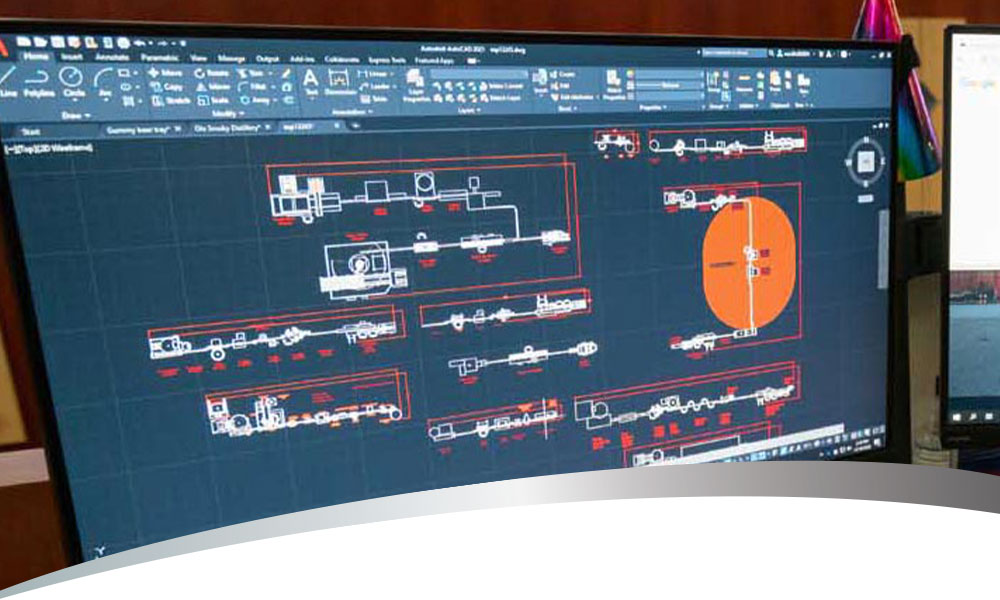
Eliminating Capital Risk with Plug & Play Rentals
Capital Expenditure (CAPEX) hurdles often stifle product line extensions and market testing. Frain’s flexible rental and Pay-As-You-Go Financing models transform major capital expenses into predictable Operational Expenditure (OPEX), allowing procurement teams to preserve working capital while accelerating speed-to-market.
- 48-Hour Speed to Ship: With over 5,000 machines in stock, Frain can retool and ship factory-ready shrink banders in as little as two business days.
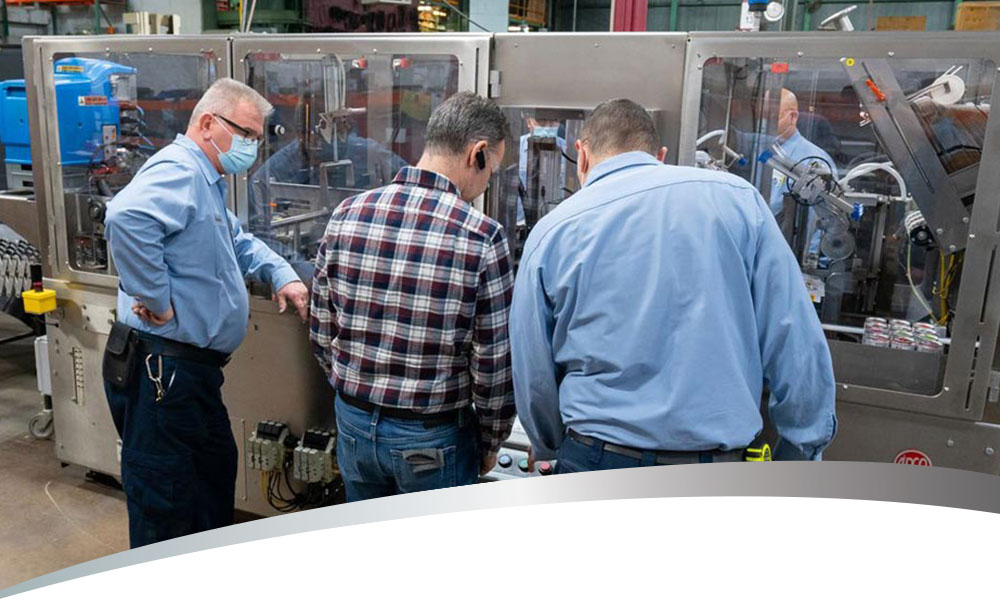
- 100% Guaranteed Factory Acceptance Testing (FAT): Before any machine leaves our facility, our senior engineering team sets up your exact container size, neck finish, film gauge, and perforation profile. You watch a live or virtual production run proving target speed, seal efficiency, and zero flagging.
- Turnkey Line Integration: Frain doesn’t just supply a standalone bander; our engineers integrate upstream bottle orienters, index conveyors, and downstream heat tunnels to deliver an end-to-end synchronized solution.
- On-Site Technical Support & Field Service: Every rental is backed by Frain’s dedicated field technicians who assist with line installation, operator training, and preventative maintenance.
4. Future Procurement Trends & Technological Developments (2025–2030)
As global supply chains evolve and sustainability mandates tighten, packaging engineers must anticipate several key technological shifts governing shrink bander engineering and procurement:
1. Shift Toward Thin-Gauge Sustainable & PCR Films
Regulatory pressures across the EU and North America are pushing manufacturers away from heavy PVC films toward ultra-thin PETG (under 30 microns) and post-consumer recycled (PCR) content films. Running ultra-thin or PCR film on legacy mechanical banders often causes film crushing or misfeeds. Next-generation shrink banders incorporate servo-driven tensioning and zero-friction mandrels designed specifically to handle delicate eco-friendly substrates without jamming.
2. AI-Driven Vision Inspection & Automated Perforation Alignment
Tamper-evident seals are subject to strict regulatory oversight in pharmaceutical and food safety sectors. Modern industrial shrink banders are increasingly paired with integrated 360-degree vision camera systems. These cameras inspect band placement height, verify perforation integrity, detect film flagging, and automatically eject defective containers at line speeds exceeding 450 CPM.

3. OEM Lead Time Volatility & Modular Machine Rental Growth
Supply chain friction has pushed new equipment lead times from traditional 12-week windows to 30–50 weeks. In response, global enterprise procurement teams are shifting toward hybrid fleet management—purchasing baseline line assets while utilizing Frain’s rental inventory to absorb promotional spikes, seasonal contract packaging orders, and unexpected equipment overhauls.
5. Industrial Shrink Bander Procurement FAQ
Below are authoritative responses to the most critical technical and operational questions asked by packaging managers, plant engineers, and global buyers when evaluating industrial shrink banders:
Accelerate Your Production Line Today
Need an industrial shrink bander immediately? Bypass 30+ week OEM lead times with Frain’s plug and play rental inventory. Contact our engineering team now for instant availability, technical sizing, and FAT scheduling.
Ready for Instant Plug & Play Machinery Rentals?
Speak directly with a Frain packaging engineer today to evaluate your container specs and secure immediate equipment delivery.