Industry Executive Overview
1. The Paradigm Shift in Parenteral Packaging: Pre-Filled Syringes (PFS)
The global pharmaceutical landscape is undergoing an unprecedented transition toward biologics, monoclonal antibodies (mAbs), mRNA therapeutics, and GLP-1 receptor agonists. Central to this paradigm shift is the rapid growth of Pre-Filled Syringes (PFS) as the gold-standard delivery system for injectable drugs. Compared to traditional vial filling, pre-filled syringes eliminate drug overfill, minimize dosing errors, streamline emergency administration, and improve patient compliance in self-administration settings.
However, filling sterile syringes presents complex aseptic processing challenges. Unlike glass or plastic vials, pre-filled syringes require specialized denesting, micro-dosing precision without thermal or shear degradation, bubble-free vacuum stoppering, and stringent particulate control under EU GMP Annex 1 guidelines. Selecting the optimal pharmaceutical syringe filling machinery requires a deep technical understanding of pump physics, barrier containment systems, isolator integration, and capital risk management.
Whether you are scaling Phase I-III clinical trial batches or executing high-volume commercial production (ranging from 50 to over 600 syringes per minute), this technical procurement guide breaks down syringe filling technologies, critical engineering considerations, future industry trends, and strategic equipment deployment models designed to bypass 12-to-18-month OEM lead times.
Equipment Recommendation & Architecture
2. Technical Classifications of Pharmaceutical Syringe Filling Machinery
Selecting syringe filling machinery requires matching the fluid dynamic properties of the drug product with the mechanical capabilities of the filling line. Modern sterile filling platforms handle pre-sterilized, nested Ready-to-Use (RTU) components supplied in sealed tubs, significantly reducing cleanroom footprint requirements.
A. Peristaltic Pump Syringe Fillers (Ideal for Biologics & Shear-Sensitive Products)
Peristaltic filling systems utilize positive displacement where rotating rollers compress medical-grade silicone or platinum-cured tubing to advance liquid. Because the drug fluid contacts only the single-use fluid path (tubing, product bag, and filling needle), cross-contamination risks are entirely eliminated.
- Dosing Range: 0.1 mL to 50 mL with accuracy tolerances up to ±0.5%.
- Key Advantage: Zero mechanical shear force, making it the preferred method for shear-sensitive proteins, high-value cell therapies, and mRNA formulations.
- Cleaning Integration: Eliminates CIP/SIP (Clean-In-Place / Sterilize-In-Place) validation cycles through disposable Single-Use Systems (SUS).
B. Rotary Piston Pump Syringe Fillers (Ideal for High Viscosity & Micro-Dosing Precision)
Rotary ceramic or 316L stainless steel piston pumps deliver exceptional volumetric accuracy through precision-ground internal clearances. As the piston rotates and reciprocates, it draws liquid into the chamber and discharges it through the needle manifold with minimal tailing.
- Dosing Precision: Exceptional micro-dosing stability (±0.1% to ±0.25%), critical for highly potent active pharmaceutical ingredients (HPAPIs).
- Viscosity Handling: Capable of accurately dispensing high-viscosity formulations up to 100,000 cPs, such as hyaluronic acid gels and sustained-release depot injections.
- Cleaning Integration: Requires validated automated CIP/SIP systems or precision offline ultrasonic cleaning protocols.
C. Flexible Multi-Format Modular Filling Lines (Syringes, Vials, and Cartridges)
To maximize facility utilization, contract development and manufacturing organizations (CDMOs) and multi-product pharma manufacturers are increasingly specifying flexible filler platforms. These robotic filling lines utilize interchangeable change parts to process nested syringes, RTU cartridges, and vials on a single isolator skid with rapid changeover times (< 2 hours).
| Technology Type |
Primary Dosing Mechanism |
Typical Speed (Units/Min) |
Dosing Accuracy |
Best Product Suitability |
Cleaning/Validation Complexity |
| Peristaltic Tubing Fillers |
Positive displacement rollers on single-use tubing |
40 – 300 PPM |
±0.5% |
Biologics, Vaccines, Shear-Sensitive mAbs |
Very Low (Single-use disposable manifolds) |
| Rotary Ceramic Piston Fillers |
Precision valveless reciprocating ceramic piston |
60 – 600+ PPM |
±0.1% – ±0.25% |
High-viscosity gels, GLP-1s, HPAPIs, Micro-doses |
High (Requires automated CIP/SIP validation) |
| Mass Flow Meter / Time-Pressure |
Coriolis flow meters or pressurized reservoir timing |
100 – 400 PPM |
±0.3% |
Low-viscosity solutions, bulk liquid filling |
Medium (SIP/CIP cleanable fluid pathways) |
| Robotic Multi-Format Lines |
Modular (Peristaltic or Piston configurable) |
20 – 150 PPM |
±0.2% |
Clinical batches, R&D, CDMO multi-drug lines |
Medium-Low (Tool-less rapid changeover) |
Forward Sourcing & Technological Evolution
3. Future Procurement & Development Trends in Syringe Filling (2025–2030)
Global pharmaceutical regulatory bodies—most notably the US FDA, EMA, and PIC/S—are continuously raising the bar for sterile drug manufacturing. Procurement directors and project engineers must evaluate future trends to ensure newly acquired machinery does not become obsolete within its operational lifecycle.
Regulatory Imperative
Revised EU GMP Annex 1 Compliance
The revised Annex 1 mandate requires a comprehensive Contamination Control Strategy (CCS). Modern syringe fillers are transitioning away from Open Restricted Access Barrier Systems (oRABS) to fully enclosed Restricted Access Barrier Systems (cRABS) and Aseptic Processing Isolators with automated VPHP (Vaporized Hydrogen Peroxide) decontamination. Human intervention inside Class A zones is systematically being phased out.
Robotics & Automation
Gloveless Robotic Isolators
Next-generation syringe filling lines utilize multi-axis cleanroom-grade robots (ISO Class 5 / Grade A compliant) for tub delidding, liner removal, syringe denesting, and filling. By eliminating glove ports, manufacturers eliminate the primary source of cleanroom contamination: glove integrity breaches and human touch points.
Process Quality
100% In-Process Control (IPC) Tare/Gross Weighing
High-speed syringe filling machinery now integrates non-contact 100% tare and gross weight verification using electro-magnetic force restoration (EMFR) load cells. Real-time feedback loops automatically adjust dosing stroke lengths dynamically, eliminating out-of-spec (OOS) batches without stopping the production line.
Advanced Stoppering
Vacuum Stoppering & Headspace Gas Flushing
To eliminate oxygen-induced drug degradation and headspace air bubbles (which can cause plunger movement during air freight transit), filling lines are adopting mechanical vacuum insertion of rubber stoppers coupled with precise argon or nitrogen purging before placement.
Strategic Financial Sourcing
4. B2B Sourcing Bottlenecks: OEM Lead Times vs. Speed-to-Market
One of the greatest operational threats facing pharmaceutical engineering teams is procurement timeline friction. Ordering a custom-built pharmaceutical syringe filling line directly from tier-one OEMs typically incurs lead times of 12 to 18 months, followed by lengthy FAT, SAT, and IQ/OQ validation protocols. In rapid-response drug production, clinical phase scaling, or sudden contract manufacturing wins, an 18-month wait time translates directly into lost market exclusivity and multi-million-dollar revenue burn.
Traditional OEM Purchase Route
- 12 to 18 Month Manufacturing Lead Time
- Heavy Capital Expenditure (CAPEX) Allocation
- Depreciation Risk if Product Fails Phase III Trials
- Long Queue for Engineering Specifications & FAT
The Frain Plug & Play Rental Advantage
- Ready Inventory Dispatched in 48 Hours
- Operating Expenditure (OPEX) Rental Flexibility
- Full In-House Engineering & Tooling Configuration
- Factory Acceptance Tested (FAT) with Your Liquid Product
Technical Intent Mining & Procurement FAQ
5. Pharmaceutical Syringe Filling Machinery: B2B Technical FAQ
Below are detailed engineering answers to the questions most frequently posed by global procurement managers, validation engineers, and CDMO executives when sourcing syringe packaging systems.
Q1: What is the difference between peristaltic pump and rotary piston pump dosing in pre-filled syringe fillers?
Answer: Peristaltic pumps rely on external roller compression against disposable flexible tubing to move product. Liquid contacts only the single-use fluid path, eliminating cleaning validation and preserving delicate biologic protein structures. Rotary piston pumps (typically ceramic or stainless steel) utilize high-precision mechanical stroke displacement inside a micro-honed cylinder. While rotary pistons deliver superior micro-dosing tolerances (±0.1%) and easily handle high viscosities (>10,000 cPs), they introduce fluid shear forces and require extensive CIP/SIP cleaning validation between production runs.
Q2: How does vacuum filling and vacuum stoppering eliminate air headspace in pre-filled syringes?
Answer: When filling high-viscosity liquids or fill volumes close to maximum syringe barrel capacity, traditional mechanical insertion of rubber stoppers traps compressed air between the liquid meniscus and the stopper. Vacuum stoppering draws a controlled evacuation (-500 to -900 mbar) of the cleanroom air inside the syringe barrel prior to plunger placement. When the vacuum is released, atmospheric pressure seamlessly drives the stopper into position without creating air bubbles, ensuring container closure integrity (CCI) and preventing plunger movement during high-altitude shipping.
Q3: What are the essential requirements for EU GMP Annex 1 compliance on a syringe filling line?
Answer: The revised EU GMP Annex 1 emphasizes proactive risk management via a Contamination Control Strategy (CCS). Key machinery requirements include:
- Enclosure of the filling and stoppering stations within a Grade A Isolator or closed RABS (cRABS) maintaining unidirectional laminar airflow (0.45 m/s ±20%).
- Continuous non-viable particulate monitoring and active air sampling directly at critical fill zones.
- Minimization or complete elimination of glove ports through automated robotic denesting and component loading.
- Integrated VPHP (Vaporized Hydrogen Peroxide) bio-decontamination systems with validated 6-log spore reduction.
Q4: How do single-use disposable fluid paths simplify bio-pharmaceutical filling validation?
Answer: Single-Use Systems (SUS)—comprising pre-sterilized gamma-irradiated bag manifolds, platinum-cured tubing, and disposable ceramic/SS needles—replace traditional stainless steel fluid pathways. By disposing of the fluid path post-batch, drug manufacturers completely bypass cleaning validation, rinse water sampling (TOC/conductivity testing), and SIP thermal mapping. This reduces changeover turnaround times from days to hours, making SUS ideal for high-mix multi-product facilities.
Q5: Can pre-filled syringe filling lines handle multiple syringe sizes (e.g., 1mL long to 5mL)?
Answer: Yes. Modern modular syringe filling machinery is engineered for fast changeovers across standard ISO 11040 glass and plastic syringe formats (0.5 mL, 1 mL long, 1–3 mL standard, and 5 mL). Changeovers typically require swapping out the nest transport starwheels, adjusting syringe body guide rails, and recalibrating the stopper insertion depth digital servomotors. Premium lines offer tool-less changeover features completed in under 45 minutes.
Q6: How does renting a syringe filler from Frain Group protect project capital and time-to-market?
Answer: Renting or utilizing Frain's pay-as-you-go financial models transforms capital expenditure (CAPEX) into predictable operational expenses (OPEX). Rather than waiting 12 to 18 months for a new machine while incurring high market opportunity costs, Frain draws from a real-time inventory of over 5,000 packaging and processing machines. Frain configures, re-tools, and tests the exact syringe filling system to your product specifications, performing a comprehensive Factory Acceptance Test (FAT) prior to 48-hour dispatch.
Engineering Trust & Corporate Expertise
6. Why Global Pharma Leaders Partner with Frain Industries
For over 40 years, Frain Industries has established itself as the world's premier provider of plug-and-play packaging and processing machinery solutions. Our unmatched engineering infrastructure allows pharmaceutical brand owners, contract manufacturers, and biotech startups to bypass conventional procurement hurdles and achieve instant operational readiness.
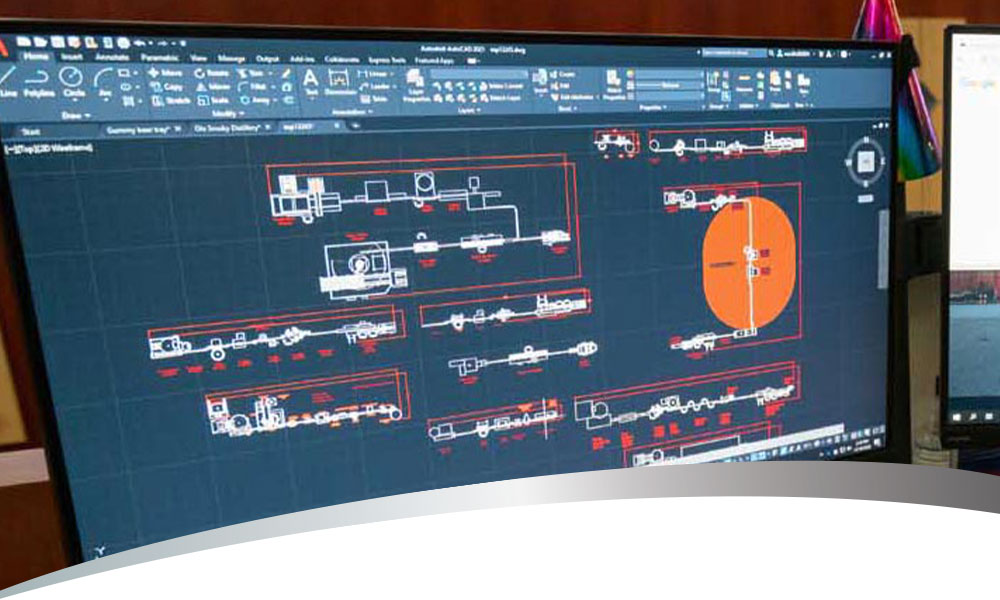
The Proven Frain Engineering Process
Our application engineers analyze your liquid rheology, syringe dimensions, cleanroom classifications, and target outputs to select, re-tool, and integrate the ideal syringe filling line from top OEMs.
Explore The Process
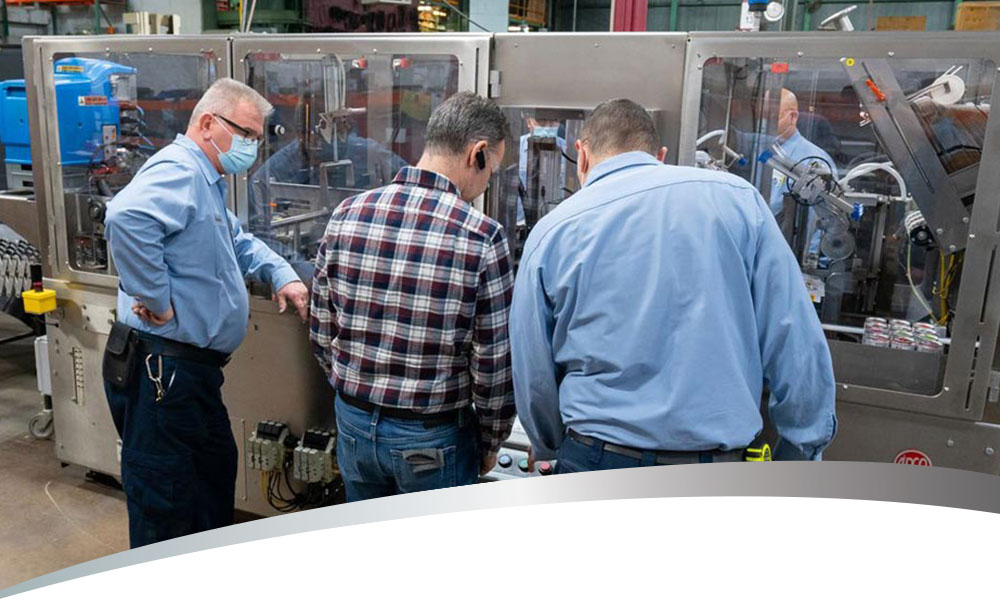
Rigorous Factory Acceptance Testing (FAT)
Before any equipment leaves our facility, we execute a full production run using your actual drug containers, stoppers, and surrogate liquids under real-time operating conditions. Zero surprises on your cleanroom floor.
Learn About FAT
Pay-As-You-Go Rental & Financing
Preserve vital working capital for drug development and clinical trials. Pay only when equipment is on your floor running production, with complete flexibility to upgrade, return, or purchase.
View Financing Models