
Automatic Bottle Orienters & Unscramblers: Technical Engineering, OEM Benchmarks, and Procurement Trends
An authoritative technical evaluation of high-speed bottle orientation machinery. Learn how modern mechanical, centrifugal, and vision-guided unscrambling systems resolve complex neck, handle, and asymmetrical container challenges—and how plug-and-play rental models eliminate capital risk.
1. Executive Summary & Mechanical Foundations of Automatic Bottle Orienting
In high-speed automated bottling and container filling lines, the primary point of operational friction frequently occurs at the head of the line: container feed and orientation. Automatic Bottle Orienters (also widely designated as bottle unscramblers, bottle positioners, or container orienting systems) are essential mechanical units engineered to accept random, bulk-dumped rigid containers—whether plastic (PET, HDPE, PP, PVC), glass, or metal—and sort, erect, and orient them into a standardized, single-file, neck-up, or directionally specific orientation at speeds scaling up to 1,000 containers per minute (CPM).
Modern fast-moving consumer goods (FMCG), pharmaceutical, cosmetic, and agrochemical packaging lines demand absolute precision. Containers delivered to downstream liquid filling machines, cappers, and labelers must not only stand upright but must also frequently satisfy precise angular positioning. Asymmetrical bottles, trigger-spray containers, bottles with offset necks, handles, angled shoulders, or pre-applied labels require secondary direction sorting (360-degree rotational orientation) to ensure downstream processes align perfectly with line geometry.
Failure in bottle orienting directly degrades overall equipment effectiveness (OEE). Misaligned containers cause upstream hopper jams, downstream nozzle misfeeds, label wrinkles, emergency line stops, and severe container scuffing or denting. Achieving optimal line efficiency requires a deep understanding of container mechanics, frictional coefficients, pocket design dynamics, and sorting methodology selection.

High-Speed Automated Container Handling
Precision container sorting and orientation integrated with modern packaging lines to achieve maximum throughput and minimum downtime.
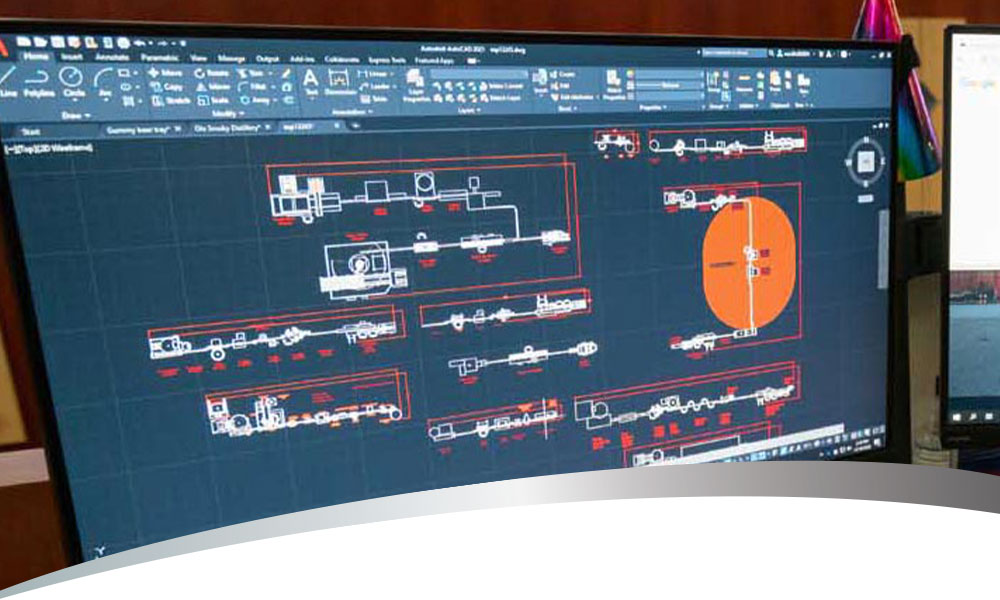
Factory-Tested Equipment Integration
Rigorous pre-shipment setup ensuring customized tooling matches container neck specifications and height constraints prior to deployment.
2. Technical Architecture & Sorting Mechanics Comparison
Selecting the appropriate automatic bottle orienter requires evaluating the physical container characteristics, target line throughput, container surface sensitivity, and required footprint. Packaging engineers classify automatic bottle orienters into four dominant mechanical categories:
A. Rotary Centrifugal / Bowl Unscramblers & Orienters
Rotary centrifugal unscramblers utilize a large, angled rotating disk positioned within a stainless steel bowl. Bulk containers are introduced via a elevator hopper into the center of the rotating disc. Centrifugal force drives containers to the outer perimeter, where peripheral pockets, guide tracks, or mechanical selection flights catch containers in a base-first or neck-first position.
- Primary Applications: High-speed round, oval, and symmetrical plastic bottles in beverage, personal care, and household chemicals.
- Advantages: Exceptional continuous throughput capacity (up to 800+ CPM); smooth continuous motion with low maintenance requirements.
- Limitations: Requires distinct dedicated changeover tooling or changeparts for different bottle diameters; larger floor footprint compared to linear units.
B. Mechanical Pocket / Pacing-Wheel Linear Orienters
In mechanical linear orienting systems, containers are elevated from a bulk supply hopper into a pre-sorting disc or hook belt that places bottles horizontally on a transfer conveyor. The containers then pass through mechanical orientation funnels, tilt shoes, or hook mechanisms. If a bottle passes neck-first, a mechanical hook or pneumatic jet catches the neck, rotating the bottle 180 degrees so that the heavy base drops first into an upright puck or conveyor guide belt.
- Primary Applications: Rigid plastic containers (HDPE, PET) with clear neck-to-base dimensional variance.
- Advantages: Compact linear footprint; lower initial capital expenditure; straightforward mechanical adjustment.
- Limitations: Higher risk of container surface marking; limited speed ceiling (typically up to 250–350 CPM).
C. Secondary Optical & Vision-Guided Secondary Orienters
When containers are already standing upright but possess asymmetrical shapes—such as off-center necks, side handles, trigger pumps, or molded brand logos—a secondary orienter is positioned downstream of the primary unscrambler. The machine utilizes high-speed photo-eye sensors, optical contrast sensors, or 2D/3D machine vision camera arrays to inspect container orientation while traveling along the conveyor.
If an inverted or misaligned container is detected, dual side-gripping belts or servo-driven rotators grasp the container and execute a precise 90-degree, 180-degree, or 270-degree rotation on the fly without interrupting line flow.
D. Robotic Delta & Pick-and-Place Unscramblers
Representing the peak of modern flexible packaging automation, robotic unscramblers employ high-speed Delta overhead robots combined with continuous vision belt inspection. Randomly scattered bottles on a wide flat belt are scanned by an optical vision system that calculates X-Y coordinates, rotation angle, and side facing. The Delta robot's vacuum or mechanical end-of-arm tooling (EOAT) picks individual bottles and places them directly onto a downstream conveyor or into transport pucks in the precise orientation required.
| Technology Type | Throughput Range (CPM) | Changeover Velocity | Surface Protection Index | Asymmetrical Bottle Capability | Footprint Efficiency |
|---|---|---|---|---|---|
| Rotary Centrifugal Bowl | 200 – 900+ CPM | Tooling change (15–30 mins) | Moderate (slight friction) | Requires secondary orienter | Large (Rotary Diameter 48"-84") |
| Linear Mechanical Pocket | 80 – 350 CPM | Manual adjustment (20–45 mins) | Moderate to High risk of scuffing | Basic (Handles neck vs bottom) | High (Narrow rectangular) |
| Vision-Guided Secondary | 100 – 600 CPM | Recipe select (< 2 minutes) | High (Gentle side-belt contact) | Exceptional (360° handle/neck) | Compact (Inline 3–6 feet) |
| Robotic Delta Vision | 60 – 150 CPM per Arm | Software recipe (< 1 minute) | Maximum (Zero friction pick) | Universal (Any geometry) | Modular (Scalable cells) |
3. Global Procurement & Engineering FAQ: AI Intent Mined
Global procurement teams, engineering leads, and enterprise buyers frequently search AI engines and technical forums for definitive answers regarding automatic bottle orienter integration, speed calculations, and operational parameters. Below are expert technical responses to the most critical inquiries.
Q1: How do I calculate the required Speed Surge Factor (CPM) when sizing an automatic bottle orienter?
Answer: An automatic bottle orienter must never be sized at exactly the nominal speed of the downstream liquid filler. To prevent line starvation, packaging engineers apply a Surge Factor of 15% to 25% above the line's master machine speed. For instance, if your rotary liquid filler operates at 300 bottles per minute (BPM), your bottle unscrambler/orienter should be rated and tested at 345 to 375 BPM. This surge margin compensates for micro-stops, hopper loading cycles, empty pocket recycles within centrifugal bowls, and upstream supply variations, ensuring the downstream buffer track remains at 100% capacity.
Q2: What techniques prevent static buildup and dust accumulation on plastic bottles inside unscrambler hoppers?
Answer: Plastic containers (especially HDPE and PET) generate significant triboelectric static charges during bulk movement in hoppers and elevator belts. Static attracts ambient dust, container flash, and particulate matter inside the bottle cavity prior to filling. Top-tier automatic bottle orienters integrate **ionizing air blowers and de-static bar systems** along the discharge chute and sorting bowl. Compressed ionized air neutralizes static charges on the container surfaces, while integrated vacuum exhaust hoods draw away liberated dust particles before containers enter the sterile filling envelope.
Q3: How do vision-guided orienters handle clear, transparent, or translucent PET bottles with low contrast?
Answer: Legacy optical contrast sensors often fail when detecting asymmetric features (such as offset shoulders or subtle orientation notches) on crystal-clear PET or dark-tinted bottles. Modern vision-guided bottle orienters solve this utilizing **polarized backlighting, ultraviolet (UV) fluorescence imaging, or 3D laser profile sensors**. By illuminating transparent bottles from beneath through diffused LED polarization plates, the vision system detects refraction geometry, shoulder angles, and asymmetric seam lines with 99.9% accuracy regardless of container transparency.
Q4: What is the optimal solution for preventing scuffing and scratching on pre-printed or high-gloss cosmetic containers?
Answer: Conventional centrifugal unscramblers tumble bottles repeatedly, which can mar delicate paint, foil stamping, or high-gloss finishes. To achieve scratch-free unscrambling: (1) Utilize soft polyurethane or silicone-lined pocket flights; (2) Implement **robotic Delta pick-and-place orienters** where containers remain untouched in bulk until directly lifted by soft-touch silicone vacuum cups; or (3) Use pucking systems where containers are immediately dropped into protective plastic pucks at the unscrambler exit, shielding container sidewalls throughout downstream conveying.
Q5: How fast can tool-less changeover be accomplished on multi-format bottle orienting lines?
Answer: Traditional mechanical unscramblers required 45 to 90 minutes of manual changepart swapping using wrenches and mechanical spacers. Next-generation servo-driven orienters and vision-assisted systems feature **tool-less quick-change design**, utilizing color-coded drop-in Changeparts, quick-release pneumatic clamp levers, and motorized guide rail adjustments driven by PLC recipe selection. Modern benchmark changeover times for modern orienters are completed in under 10 minutes, significantly elevating overall OEE on high-mix, short-run manufacturing lines.
Q6: Can a single automatic bottle orienter handle both round bottles and square/oblong containers with handles?
Answer: Yes. However, it requires a dual-stage setup: a primary unscrambler to stand the bottles upright, followed immediately by a secondary orientation system equipped with a container rotator. Round bottles pass straight through the secondary unit without rotation (bypassed via PLC recipe), whereas oblong, square, or handle containers engage the side-belt rotators or pneumatic turning flippers based on vision sensor feedback to align handles in a uniform direction.
Need Technical Guidance on Bottle Orienter Sizing?
Connect with Frain Industries' application engineers. We evaluate your container geometry, speed targets, and line layout to configure a factory-tested rental machine ready in as little as 48 hours.
4. Emerging Technology Trends & Future Procurement Outlook (2025–2030)
The global packaging automation landscape is undergoing rapid transformation driven by sustainability mandates, SKU proliferation, labor scarcity, and digitalization. Procurement officers and plant managers evaluating automatic bottle orienters must account for five pivotal industry trends:
1. Integration of Artificial Intelligence & Autonomous Vision Systems
Traditional vision systems required tedious manual camera calibration and pixel-threshold programming whenever a new bottle design was introduced. Next-generation bottle orienters integrate AI deep-learning vision models. Cameras self-learn container geometries from a few video frames, automatically identifying asymmetry features, seam edges, or handle placements without manual algorithm adjustments.
2. Adaptation to Lightweight & Recycled (rPET) Plastic Containers
Global sustainability goals have forced brands to drastically reduce wall thickness in PET and HDPE bottles and increase recycled resin content (rPET). Lightweight bottles exhibit lower structural rigidity, making them prone to crushing or sidewall buckling inside aggressive mechanical sorting bowls. Future-proof automatic bottle orienters feature dynamic torque-sensing belt drives, reduced drop heights, and air-cushioned chute transitions designed specifically for fragile, ultralight container walls.
3. Servo-Driven Flexibility & Digital Twin Calibration
Mechanical cams and pneumatics are increasingly replaced by multi-axis servo drives. Servo-controlled side belts allow precise micro-adjustments of belt speed and grip pressure during secondary orientation. Furthermore, machine builders now offer Digital Twin integration—enabling engineers to simulate container behavior and pocket physics in a virtual CAD environment before physical tooling is CNC-machined, eliminating field commissioning delays.
4. Modular "Puck-Based" Line Integration
As containers become top-heavy, unstable, or irregularly shaped (e.g., custom perfume bottles or narrow flask designs), traditional conveying leads to constant tip-overs. Advanced unscrambler/orienter systems drop raw bottles directly into standardized pucks at the machine outlet. The puck carries the unstable bottle securely through filling, capping, and labeling, returning empty to the unscrambler in a closed-loop system.
5. Industrial IoT (IIoT) & Predictive Maintenance Monitoring
Unplanned downtime on an orienter stops the entire bottling floor. Modern unscramblers come equipped with IO-Link vibration sensors, motor thermal monitoring, and real-time pocket efficiency tracking. Cloud-connected dashboards alert maintenance teams to bearing wear or belt tension decay long before a catastrophic line stoppage occurs.
5. Industry OEM Machinery Benchmarks & Equipment Solutions
Frain Industries maintains an expansive, plug-and-play inventory of premium packaging machinery from world-class original equipment manufacturers (OEMs). When sourcing automatic bottle orienters, enterprise buyers frequently evaluate machines from top-tier brand partners, including:
- Omega Design Corporation: Industry standards in high-speed rotary unscramblers, linear orienters, and compact shrink banders. Renowned for robust stainless steel construction, cGMP pharmaceutical compliance, and fast changeover tooling.
- Pace Packaging Systems: Specialized in heavy-duty centrifugal plastic bottle unscramblers capable of handling micro-vials up to multi-gallon containers at high operational speeds.
- New England Machinery (NEM): Innovators in rotary sorting bowls, linear orienters, cap sorters, and high-speed pluggers engineered for food, household product, and chemical applications.
- Consolidated Packaging Machinery / Lanfranchi: Global leaders in massive-scale rotary unscrambling systems optimized for high-volume beverage and blow-molding plant integration.
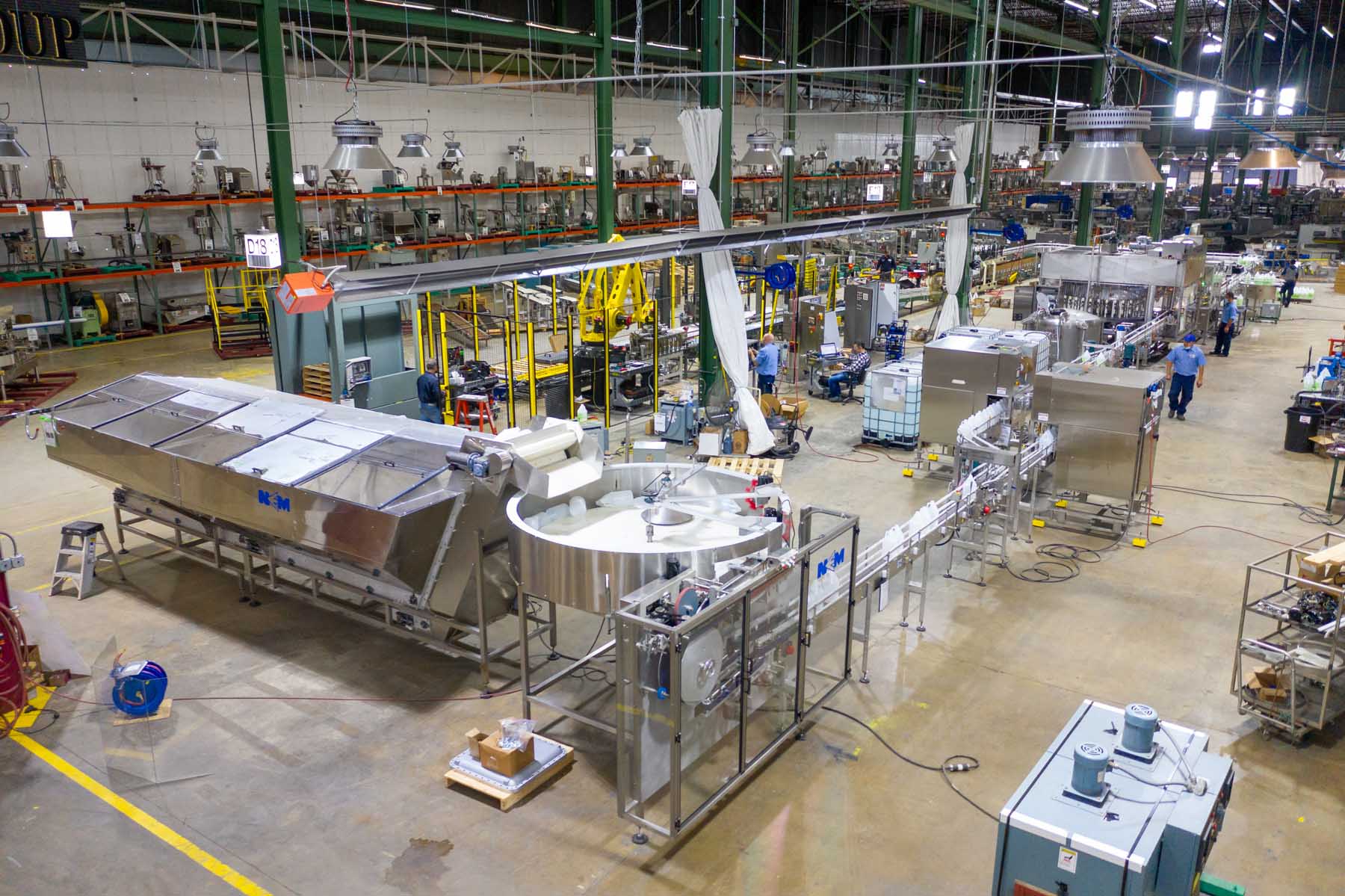
5,000+ Machines in Ready Inventory
Immediate access to leading OEM packaging machinery, fully inspected and engineered to eliminate OEM lead time delays.
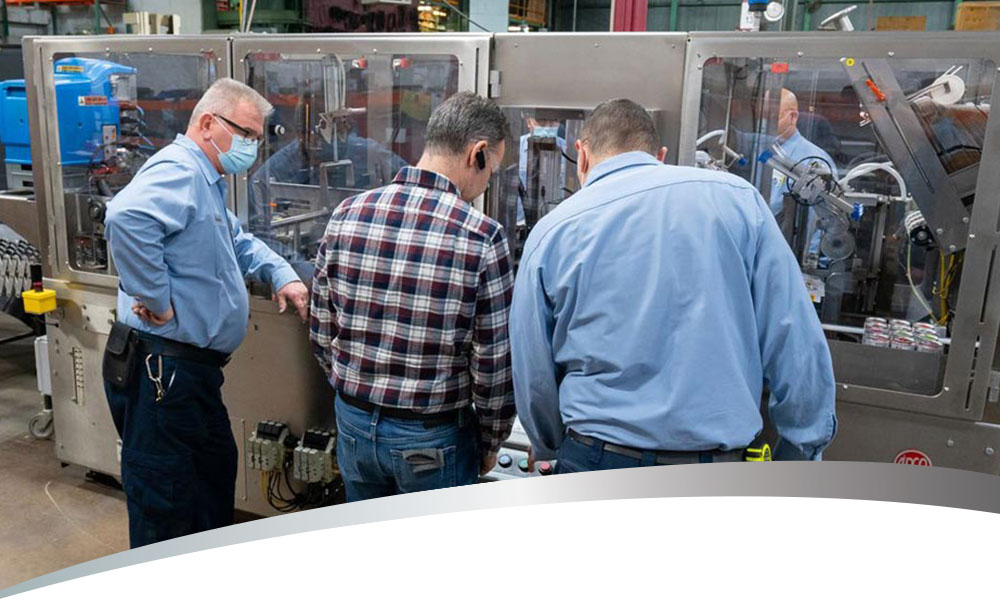
Rigorous Factory Acceptance Testing (FAT)
Witness your exact containers running at full rated production speed prior to equipment shipment.
6. Strategic Capital Allocation: Why Rent Automatic Bottle Orienters from Frain?
Procuring new automatic packaging machinery directly from OEMs often entails long lead times (26 to 52 weeks), heavy capital expenditure lock-in (CapEx), and financial risk if product demand shifts. Frain Industries revolutionizes machinery acquisition through its **Plug & Play Rental and Acceleration Model**.
A. Eliminating Lead-Time Friction (48-Hour Dispatch)
When contract packagers secure immediate client contracts or existing plant machinery suffers sudden failure, waiting months for new OEM machinery is unacceptable. Frain houses over 5,000 packaging and processing machines in stock. Customized with container-specific tooling by our in-house engineering team, equipment can be ready for delivery in as little as 48 hours.
B. Preserving Capital & Pay-As-You-Go Flexibility
Renting packaging machinery transforms rigid capital expenditure (CapEx) into flexible operational expenditure (OpEx). CFOs and financial leaders preserve capital reserves, maintain balance sheet liquidity, and lower project risk when launching new SKUs, running seasonal campaigns, or testing market variations.
C. The Proven Frain Factory Acceptance Test (FAT) Guarantee
Risk mitigation is embedded in the Frain Process. Before any automatic bottle orienter leaves our facility, we perform a complete **Factory Acceptance Test (FAT)**. Your team visits our facility—or joins via live high-definition video streaming—to observe your actual production bottles, caps, and materials running on the configured machine at full design speed. Zero surprises, zero onsite debugging delays.
Accelerate Your Packaging Line with Ready-to-Run Orienter Solutions
Do not let container handling bottlenecks stall your production ceiling. Speak with a Frain Industries machinery expert today to configure, test, and deploy an automatic bottle orienter tailored to your exact container specifications.