
Industry Knowledge & Insights

Frain Machinery Blog

Latest Articles, Buying Guides, and Rental Strategies for Packaging & Processing

0%

Choosing the right Rotary Liquid Fillers in 2026 is not simply a matter of comparing advertised speeds. A machine that performs well with thin water may struggle with viscous sauces, foaming cleaners, or temperature-sensitive products. The best choice depends on the liquid, container, production target, and available floor space. Small details matter. A narrow bottle neck, for example, can affect nozzle selection and filling accuracy.

This guide introduces leading rotary filler options and the practical factors behind a sound comparison. It considers filling technology, output range, changeover time, cleaning access, control systems, and support after installation. Buyers should also check how a machine handles their actual containers and product, not just a supplier’s standard demonstration. Requesting a product trial and reviewing operating requirements can reveal issues that a brochure will miss. That sounds obvious. It is often overlooked.

There is no single best filler for every plant. A high-speed system may suit a large facility but bring unnecessary cost and complexity to a smaller operation. Likewise, a lower purchase price may not reflect the labor, maintenance, or downtime required over time. The sections ahead explain how to assess these trade-offs, compare equipment capabilities, and identify questions worth asking suppliers. Use them as a starting point, then verify specifications against your own production conditions.
What Are the Top Rotary Liquid Fillers in 2026?

Rotary Liquid Fillers in 2026: Core Components and How They Work

What Are the Top Rotary Liquid Fillers in 2026?

Rotary Liquid Fillers in 2026: Core Components and How They Work

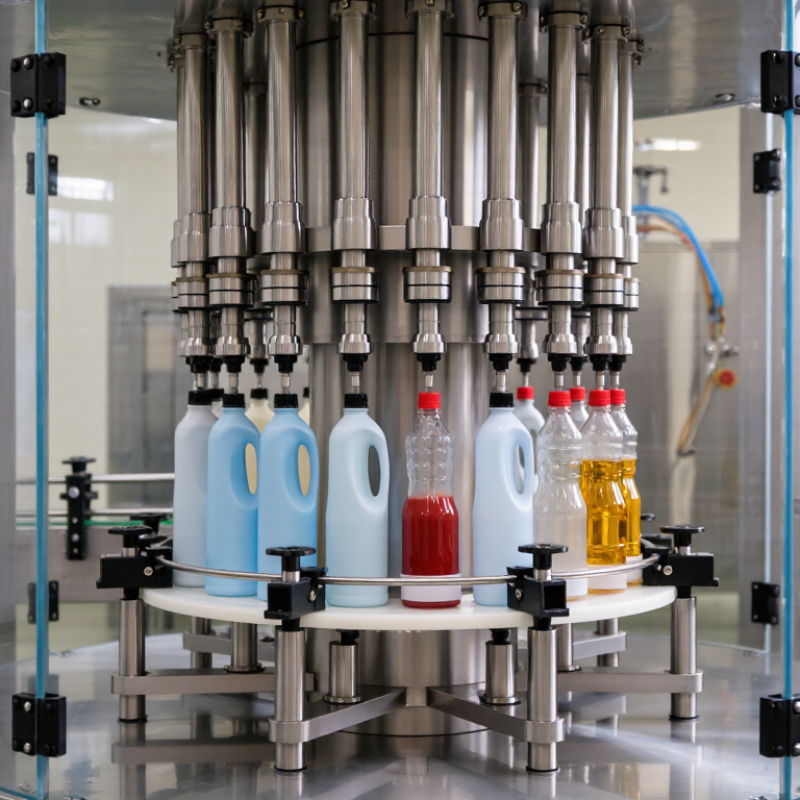
A rotary filler moves containers around a circular carousel, stopping or slowing them beneath filling heads. Its frame supports the assembly, while an infeed starwheel spaces bottles and guides them onto the rotating table. Pumps or gravity-fed tanks deliver liquid through valves and nozzles. Sensors detect each container; a PLC coordinates timing, fill volume, and conveyor speed. The sequence looks simple. Small timing errors can still cause splashes or uneven fills.

Grand View Research’s Filling Machines Market report estimated the global market at USD 7.74 billion in 2023, with a projected 4.3% compound annual growth rate from 2024 to 2030. That broader market estimate is not specific to rotary equipment, but it reflects continued demand for filling systems. In practice, product viscosity, foaming, and container shape influence whether a machine needs timed-flow, volumetric, or weight-based controls. No single configuration suits every line.

Tips: Match the nozzle to the liquid, then test with actual containers at target speed. Check fill accuracy across several carousel positions, not just one. Keep calibration records, and inspect seals and valves during routine maintenance. A missed check can become a messy shift. Cleaning access matters, too; operators need to reach product-contact parts without awkward workarounds.

Rotary Liquid Fillers in 2026: Core Components and How They Work

A typical rotary filling cycle, shown in operating order. Machine layouts and filling methods vary by product and container.

Bottles move from the infeed conveyor through the starwheel and container-handling system. Product flows from the tank through a rotary manifold to the filling valve, which opens and closes to control each dose. A discharge starwheel then transfers filled bottles out of the machine. Bottle lifts and metering controls are used where the filler design requires them.

Four Metering Systems Compared: Piston, Gravity, Pump, and Flowmeter

What Are the Top Rotary Liquid Fillers in 2026?

Four Metering Systems Compared: Piston, Gravity, Pump, and Flowmeter

A rotary filler indexes bottles beneath several filling heads, supporting steady output when containers arrive consistently. The metering system determines how each product behaves. Piston fillers suit thicker liquids, such as syrup, because a set stroke displaces a measured volume. Gravity fillers use liquid head pressure and work best with free-flowing products. Foam can complicate both methods. Product trials matter more than a neat specification sheet.

Pump systems handle varied viscosities and can support gentle transfer, but performance depends on pump design and setup. Flowmeter systems measure liquid moving through a line; they can offer flexible recipes, yet require suitable sensors, calibration, and stable product conditions. Grand View Research valued the global packaging machinery market at USD 45.5 billion in 2023 and forecast 5.8% annual growth for 2024–2030. This is market context, not evidence that one filler type is universally superior.

Tips: Test the actual liquid at operating temperature. Watch for drips, foam, and fill-level variation across a full rotary run. Record changeover and cleaning time, too. A quick test can miss problems. Recheck results after line speed changes, since the ideal setting on paper may not hold on the production floor.

Manufacturer-Rated Throughput: 60–1,200 Containers per Minute

Rotary liquid fillers are often compared by one headline figure: rated throughput. In 2026, manufacturer-rated machines span roughly 60 to 1,200 containers per minute. That range is useful, but it is not a promise for every production line. Ratings depend on the container, liquid, fill volume, and test conditions. A small, stable bottle may run faster than a wide container filled with a foaming product. The difference can be substantial.

A practical comparison starts with the actual package. Check the number of filling valves, indexing speed, and whether containers need to pause beneath the nozzles. Then ask how speed was measured: with water, or with the product you plan to run? Viscous liquids may need longer filling times. Foam can require slower nozzle movement and extra settling time. Small details matter. A capper or labeler can also become the line’s bottleneck, even when the filler has spare capacity.

Treat the advertised rate as a reference point, not a production guarantee. Request a trial using representative containers and product, and record both speed and fill accuracy. Ask for results across several minutes, not just a brief peak. Changeovers, cleaning, and minor jams reduce real output; estimates often understate those interruptions. I would leave room in the calculation for them. It is easy to focus on the fastest number and overlook the shift’s less tidy reality.

Filling Accuracy and Net-Content Checks Under OIML R 87

Rotary liquid fillers are often compared by speed, but net-content control deserves equal attention. Under OIML R 87, prepackages are assessed for declared quantity, including average quantity and permitted shortfall rules. Requirements and enforcement details can vary by market. A fast carousel is not automatically a reliable one.

A useful evaluation begins with repeatable checks. Run containers at normal speed, then sample bottles across several filling heads and production intervals. Record net mass or volume using calibrated equipment, accounting for liquid density when converting between them. Check the first bottles after startup, too. They can behave differently. Foam, temperature shifts, dripping nozzles, and changing supply pressure may all affect results. A filler’s display is not independent proof of package content.

Ask how the system handles rejects, alarms, and retained records. A practical setup should identify trends before underfilled packages accumulate, while avoiding needless product giveaway. Verify its measurement method against suitable reference equipment and document calibration intervals. Check fill variation after a changeover, not only during a polished demonstration. That is where weaknesses appear. Sampling has limits, and a tidy data sheet can hide poor bottle-to-bottle consistency. Use OIML R 87 to guide verification, alongside local metrology advice and a clearly defined quality plan. Operators should be able to trace each sample to a filling head, time, and production lot.

Choosing a Top Filler by Viscosity, Container Size, and Sanitation Needs

Rotary liquid fillers can deliver steady output, but the right machine depends on the product’s behavior at the nozzle. Water-like liquids usually need different pump control than syrups, creams, or sauces. Check how a sample pours at operating temperature; viscosity can shift after heating or mixing. Small detail, big effect.

For thin liquids, timed-flow or gravity systems may suit simple formats, while thicker products often need positive-displacement pumping. An uneven stream, stringing, or trapped air can cause inaccurate fills and messy container rims. Ask for trials using your actual liquid, not a convenient substitute. Compare fill weights across several heads and speeds, then inspect the first and last containers in a run. That part gets overlooked.

Container size matters just as much. A filler should accommodate your smallest and largest bottles without awkward change parts or unstable handling. Check neck clearance, indexing accuracy, and whether short runs justify quick-change tooling. For sanitation, review product-contact materials, drainability, inspection access, and the cleaning procedure. Dead legs or hidden seals can complicate cleaning, even when the exterior looks spotless. Specifications rarely tell the whole story; operators may find a stubborn residue point after repeated changeovers. Leave room for that uncertainty.

FAQS

How does a rotary liquid filler work?

Containers travel on a circular carousel beneath filling heads. Pumps or gravity-fed tanks move liquid through valves and nozzles.

What are the main components?

The frame supports the machine, while an infeed starwheel spaces bottles. Sensors detect containers, and a PLC coordinates filling and conveyor timing.

What speeds are available?

Manufacturer-rated speeds range from about 60 to 1,200 containers per minute. Actual output depends on the product and package.

Does the rated speed guarantee production output?

No. Cleaning, changeovers, jams, and downstream equipment can reduce output. A capper or labeler may become the bottleneck.

How does liquid type affect filling?

Viscous liquids may need longer fill times. Foaming products can need slower nozzle movement and extra settling time.

How can a buyer check filling performance?

Test with the actual liquid and containers at target speed. Record speed and fill accuracy over several minutes, not just one brief run.

What should operators inspect during routine maintenance?

Check calibration records, seals, and valves. Make sure product-contact parts are easy to reach for cleaning.

Is one filler setup right for every production line?

No. Container shape, fill volume, viscosity, and foam all matter. One successful test may still flatter the results, so I would repeat it.

Conclusion

Rotary Liquid Fillers are designed to move containers through a continuous filling process using synchronized rotating stations. Their core components typically include a container-handling system, filling heads, a metering unit, and controls that coordinate product delivery. The metering method affects performance: piston systems suit many viscous products, gravity filling works well with free-flowing liquids, pumps offer flexible transfer, and flowmeters measure dispensed volume electronically. Manufacturer-rated throughput can range from about 60 to 1,200 containers per minute, depending on the machine, product, container, and production setup.

Choosing a filler means balancing speed with accuracy and practical operating needs. Net-content checks based on OIML R 87 principles can help verify that packages contain the intended amount. Product viscosity, container dimensions, changeover frequency, and sanitation requirements all influence the best configuration. Evaluating these factors together helps identify equipment that can maintain consistent fills while fitting the production line’s capacity and cleaning procedures.

Lily

Lily

Lily is a dedicated marketing professional with a profound expertise in her field, bringing a wealth of knowledge and experience to our company's core operations. With a keen understanding of our product offerings, she excels in crafting compelling and insightful content that resonates with our......