
Industry Knowledge & Insights

Frain Machinery Blog

Latest Articles, Buying Guides, and Rental Strategies for Packaging & Processing

0%

Top Inline Liquid Filling Nozzles for Global Buyers? The answer depends on product behavior, container geometry, and production targets. Inline Liquid Filling Nozzles must handle viscosity, foaming, dripping, and chemical compatibility. A nozzle that performs well with water may fail with honey, shampoo, or pharmaceutical syrup.

Market growth makes this decision more important. MarketsandMarkets projects the global liquid packaging market to grow from approximately USD 472.8 billion in 2023 to USD 594.4 billion by 2028. PMMI’s packaging machinery reports also identify labor shortages, automation, and flexible production as major industry pressures. These trends favor nozzles that support quick changeovers and stable filling accuracy.

Rick Fox, a filling-equipment specialist at E-PAK Machinery, describes the practical principle clearly: “The nozzle must match the product, container, and production speed.” That sounds simple. It is not always simple. Buyers should examine fill-volume consistency, sanitary design, drip control, nozzle spacing, and cleaning access. Stainless steel construction remains common, but material choice still requires product-specific review. Some buyers focus too heavily on machine speed. That can be a mistake.

The strongest options balance accuracy with maintainability. Servo-controlled systems can improve repeatability, while diving nozzles may reduce foam in certain applications. However, no universal nozzle exists. This guide compares leading Inline Liquid Filling Nozzles for global buyers, using manufacturer specifications, operating experience, and recognized market data. Performance claims should still be verified through product trials before purchase.
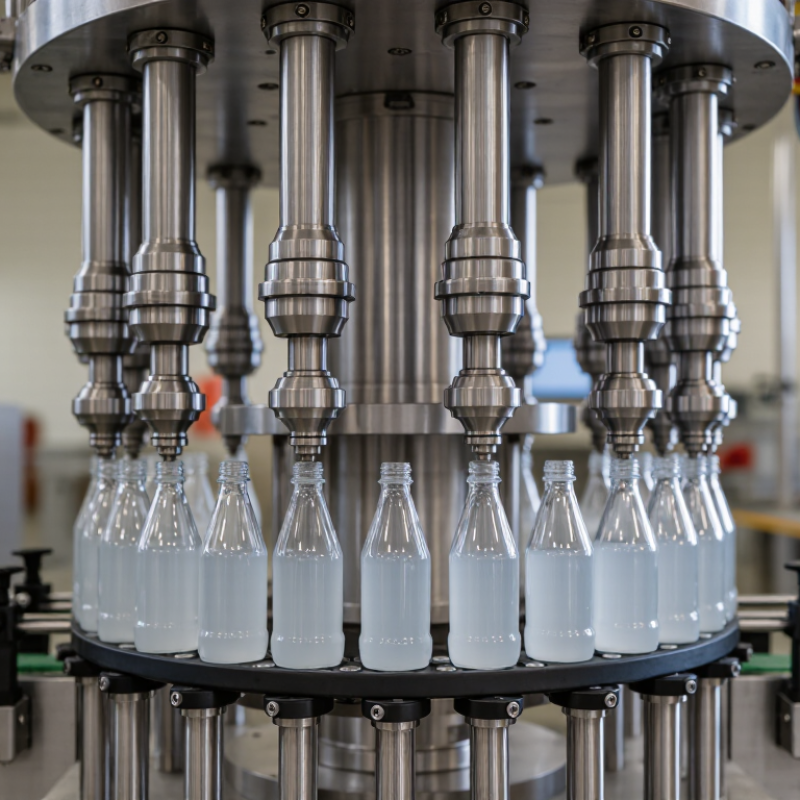
Top Inline Liquid Filling Nozzles for Global Buyers?

What Inline Liquid Filling Nozzles Are and How They Work

Inline liquid filling nozzles are the contact points between a filling machine and each container. They control how liquid enters bottles, jars, or pouches. A pump sends product through a manifold, while valves open at programmed intervals. The nozzle then stops flow before the container moves forward. Some designs dive into the container to reduce foam. Others use anti-drip tips for clean, accurate filling.

A 2024 Grand View Research report estimated the global liquid packaging market at over USD 400 billion. This growth increases demand for faster and more hygienic filling equipment. However, speed alone is not enough. Viscosity, surface tension, temperature, and foaming behavior affect nozzle performance. A thin sanitizer-like liquid may need a narrow, fast-closing orifice. A thick syrup may require a wider passage and stronger pumping pressure. Food and pharmaceutical users should also examine stainless-steel grades, clean-in-place access, seal materials, and dead-leg risks.

Tips Test the nozzle with the actual product, not only water. Measure fill-weight variation across several production cycles. Watch the final drop. It often reveals poor shutoff timing. In my experience, the first nozzle selection is rarely perfect. A small amount of foam can change the result. Review flow data, cleaning records, and operator feedback before approval. A reliable specification should include flow rate, target accuracy, container opening size, product temperature, and cleaning method.

Key Nozzle Types for Different Liquid Properties

Top Inline Liquid Filling Nozzles for Global Buyers?

Key Nozzle Types for Different Liquid Properties

No single filling nozzle suits every liquid. Water-like products usually work well with straight open nozzles. They support steady flow and fast cycle times. However, splashing can occur when the container is narrow or the filling speed is high. A longer nozzle can reduce turbulence.

Thick liquids need a different approach. Piston-style or positive-displacement nozzles handle creams, gels, and syrups more consistently. Their wider passages reduce pressure loss. Heated nozzles may help with products that become stiff at room temperature. Temperature must remain controlled, or viscosity may change during the shift.

Foaming liquids require gentle, low-turbulence filling. Diving nozzles can enter the container and rise with the product level. This method often reduces foam and trapped air. For liquids containing small particles, use larger internal passages. Narrow tips may clog or damage soft particles. Drip-free shutoff designs are useful for oils and detergents.

Material compatibility matters too. Stainless steel suits many hygienic applications, while seals must match the liquid and cleaning process. Practical trials should measure accuracy, dripping, foam, cleaning time, and wear. A catalog selection can still fail on the production line. This is easy to underestimate. Test with the actual container, temperature, and filling speed before approval.

Top Inline Liquid Filling Nozzles for Global Buyers? - Key Nozzle Types for Different Liquid Properties
Nozzle Type Liquid Properties Typical Applications Recommended Viscosity Range Suitable Filling Method Main Advantages Key Limitations Important Design Features
Open Straight Nozzle Low-viscosity, free-flowing liquids with little or no foaming Water-like beverages, diluted cleaning solutions, light oils, and liquid supplements Approximately 1–100 mPa·s Time-pressure, gravity, overflow, or piston filling Simple construction, low maintenance, easy cleaning, and economical replacement Can drip after filling and may create splashing with high-speed or turbulent flow Smooth internal bore, sanitary welds, appropriate outlet diameter, and optional shut-off valve
Anti-Drip Shut-Off Nozzle Low- to medium-viscosity liquids where product tails or post-fill dripping must be controlled Liquid detergents, personal-care liquids, edible oils, and household chemicals Approximately 1–2,000 mPa·s Piston, gear-pump, servo-pump, or time-pressure filling Reduces product stringing, protects the container finish, and improves fill-weight consistency Moving seals and valves require inspection; unsuitable seal materials may swell or degrade Pneumatic or servo-actuated shut-off, replaceable seals, short product path, and drip-control tip
Diving or Bottom-Up Nozzle Foaming liquids or products that require reduced turbulence during filling Shampoos, liquid soaps, carbonated or aerated products, and foaming cleaners Approximately 1–5,000 mPa·s Overflow, mass-flow, pressure, or pump-assisted filling Fills from the bottom upward, limiting foam formation and reducing trapped air Requires sufficient container depth and accurate nozzle motion; increases equipment complexity Programmable vertical movement, submerged outlet, controlled withdrawal speed, and compatible guide system
Overflow Nozzle Low- to medium-viscosity liquids where a uniform visible fill level is important Clear beverages, shampoos, cosmetic liquids, and household cleaning products Approximately 1–1,500 mPa·s Overflow filling with a return circuit Provides consistent fill height despite moderate container-volume variation and supports attractive presentation Requires a compatible return system; not ideal for highly viscous, particulate, or shear-sensitive products Vent-and-return passage, adjustable seal height, sanitary manifold, and controlled overflow collection
Piston-Filler Nozzle Medium- to high-viscosity liquids, creams, gels, and products requiring accurate volumetric dosing Sauces, lotions, creams, gels, syrups, and filled food products without large particulates Approximately 100–100,000 mPa·s Positive-displacement piston filling Good volumetric accuracy, repeatability, and ability to handle demanding viscosities Higher shear and more components than gravity filling; piston seals need regular maintenance Large smooth passages, hygienic piston seals, adjustable stroke, and product-compatible valve geometry
Rotary Lobe or Low-Shear Pump Nozzle Viscous, shear-sensitive, or structured liquids that can be damaged by aggressive pumping Yogurt-like products, emulsions, creams, gels, and sensitive personal-care formulations Approximately 500–100,000 mPa·s Positive-displacement low-shear pump filling Gentle product handling, stable flow, and good control over viscous materials Higher capital cost and more demanding cleaning and maintenance requirements Low-shear pump, oversized flow path, minimized dead zones, and hygienic quick-disconnect fittings
Particulate-Product Nozzle Liquids containing suspended solids, fruit pieces, seeds, fibers, or soft inclusions Chunky sauces, soups, preserves, dressings, and food products with particulates Approximately 100–50,000 mPa·s, depending on solids content Piston, progressive-cavity, or other positive-displacement filling Accommodates solids while reducing blockage risk and product damage Lower maximum speed; small passages, sharp bends, and narrow valve seats can cause plugging Large-diameter bore, gentle-radius transitions, wide valve opening, and easy dismantling for sanitation
Air-Operated Pinch Nozzle Abrasive, corrosive, or contamination-sensitive liquids requiring an isolated product path Mineral slurries, pigments, powders in suspension, corrosive cleaners, and specialty chemicals Approximately 10–50,000 mPa·s Pump-fed or pressure-assisted filling Product contacts only the flexible tube, simplifying changeover and protecting the valve mechanism Tubing is a wear component and must be selected for chemical compatibility, temperature, and pressure Chemically resistant tube, controlled pinch force, replaceable liner, and suitable pressure regulation
CIP/SIP Sanitary Nozzle Hygienic liquid products requiring validated cleaning or sterilization procedures Dairy products, beverages, pharmaceutical liquids, and personal-care formulations Approximately 1–10,000 mPa·s Mass-flow, piston, pump, or pressure filling in hygienic systems Supports clean-in-place or steam-in-place processes and reduces manual disassembly Higher purchase cost; installation, drainability, and cleaning parameters must be validated 316L stainless steel product-contact parts, polished surfaces, sanitary fittings, drainable geometry, and certified elastomers
Heated or Jacketed Nozzle Temperature-sensitive viscous liquids that flow more easily when kept within a controlled temperature range Hot-melt products, wax-containing formulations, chocolate-like products, and temperature-dependent creams Commonly 1,000–250,000 mPa·s, depending on temperature Heated piston, gear-pump, or progressive-cavity filling Maintains consistent viscosity and helps prevent solidification in the product path Requires temperature control, insulation, and safeguards against overheating or product degradation Jacketed body, thermocouple connection, insulated surfaces, uniform heat distribution, and temperature interlock

Note: Viscosity ranges are practical selection references rather than universal limits. Final nozzle sizing should also consider flow rate, temperature, foaming tendency, particle size, chemical compatibility, container geometry, cleaning requirements, and the required filling accuracy.

How to Compare Materials, Flow Rates, and Filling Accuracy

Top Inline Liquid Filling Nozzles for Global Buyers?

Material choice controls hygiene, chemical resistance, and service life. Stainless steel 316L suits many aqueous products and tolerates repeated cleaning. PTFE handles aggressive chemicals, but it can deform under heat or poor mechanical support. PEEK offers strength and dimensional stability, although its price may complicate replacement planning. Check surface finish, weld quality, seals, and documented compatibility. A shiny nozzle is not automatically a hygienic nozzle.

Flow rate must match product viscosity, container size, and line speed. A narrow nozzle may reduce dripping, yet it can increase pressure and filling time. A wider opening may improve throughput but create splashing or foam. PMMI’s 2024 Packaging Compass identifies labor efficiency, flexible equipment, and faster changeovers as major packaging priorities. These priorities make tool-free nozzle adjustment valuable. Still, catalogue flow figures are often tested with water. That is a weak comparison for syrup, oil, or suspended liquids.

Accuracy needs measured evidence, not optimistic wording. ISO 5725 separates repeatability from reproducibility, so buyers should request both test conditions. Record at least 30 consecutive fills, using the real product temperature and container. Review average error, standard deviation, startup waste, and performance after cleaning. Grand View Research reported continued growth in the global filling-machine market, driven by automation and production efficiency. Growth does not guarantee precision. I would also test the least convenient container; equipment often performs best in demonstrations.

Global Compliance and Compatibility Requirements to Check

Top Inline Liquid Filling Nozzles for Global Buyers?

Global Compliance and Compatibility Requirements to Check

Choosing an inline liquid filling nozzle requires more than matching pipe size. Buyers should verify materials, pressure ratings, temperature limits, and cleaning procedures. Stainless steel may suit many applications, but the exact grade and surface finish still matter. Rough internal surfaces can trap residue and complicate sanitation.

Check whether the nozzle design supports the destination market’s requirements. Documentation may include material certificates, traceability records, hygienic design details, and test reports. Requirements differ across food, cosmetic, chemical, and pharmaceutical operations. Do not assume one certificate covers every country. Confirm the latest local rules with qualified compliance personnel.

Fluid behavior is equally important. Low-viscosity liquids may drip after filling, while thicker products can require larger passages or heated lines. Test seals against the actual liquid, especially when solvents, oils, acids, or cleaning agents are involved. A compatible gasket on paper may swell during repeated cycles. That failure can be expensive.

Test it under real conditions.

Review connection standards before ordering. Thread forms, clamp dimensions, electrical controls, and machine spacing can vary between facilities. Inline alignment also affects accuracy and wear. In plant trials, small pressure changes sometimes create uneven fills. A nozzle can look perfect during a short demonstration, yet perform poorly after hours of continuous operation. Keep samples, test settings, and inspection records for future audits.

How to Select the Right Supplier and Configure Your System

Selecting inline liquid filling nozzles starts with the product, not the catalog.

Measure viscosity, foaming, temperature, and particle content. A thin cleaning liquid may need a fast, non-drip nozzle. A thick lotion requires wider passages and controlled filling speed. Small details matter.

Ask suppliers for documented accuracy tests using your actual liquid. Request material certificates, dimensional drawings, cleaning instructions, and replacement-part lists. Stainless steel contact parts should suit the product and cleaning method. Confirm whether the nozzle supports sanitary connections, automatic shutoff, and easy disassembly. These features reduce residue around the filling head.

Your system configuration also needs practical review. Match the nozzle number with conveyor speed, container spacing, pump capacity, and PLC signals. Check the working pressure and height adjustment range before ordering. A factory trial with sample containers can reveal splashing or unstable levels. Do not rely on photographs alone.

We once underestimated foam behavior during a fast trial. The nozzle looked correct, but the liquid level varied. That mistake changed our testing process. Reliable suppliers explain limitations clearly and provide measurable test data. They should also discuss lead times, technical support, spare seals, and regional service arrangements. A lower purchase price may become expensive when one small seal stops production.

FAQS

What is an inline liquid filling nozzle?

It connects the filling machine to each container. It controls liquid flow, timing, and shutoff. Some nozzles enter the container. Others use anti-drip tips.

How does an inline nozzle work?

A pump pushes liquid through a manifold. Valves open at programmed intervals. The nozzle stops flow before the container moves forward.

How does liquid type affect nozzle selection?

Thin liquids may need narrow, fast-closing openings. Thick syrups often need wider passages and stronger pressure. Foam changes everything.

Should nozzle testing use water?

No. Test with the actual product. Water cannot represent syrup, oil, foam, or suspended liquids. Measure at real temperature and line speed.

Which materials suit liquid filling nozzles?

Stainless steel often supports repeated cleaning and many aqueous products. PTFE can resist aggressive chemicals but may deform under heat. PEEK offers strength, though replacement costs may matter.

How can filling accuracy be measured?

Record at least 30 consecutive fills. Use the real product, container, and temperature. Review average error, variation, startup waste, and post-cleaning results.

What details should a nozzle specification include?

Include flow rate, target accuracy, opening size, product temperature, and cleaning method. Also list pressure limits, seal materials, and connection dimensions. Small omissions become expensive later.

What compliance documents should global buyers request?

Request material certificates, traceability records, hygienic design details, and test reports. Confirm current local requirements with qualified compliance personnel. One certificate may not cover every market.

Why do leaks, foam, or uneven fills appear during production?

Poor shutoff timing can leave a final drop. Narrow openings may increase pressure and filling time. Small pressure changes can also create uneven fills.

Is the first nozzle choice usually correct?

Not always. Actual production conditions often reveal weak points. Review flow data, cleaning records, operator feedback, and long-run samples before approval.

Conclusion

Inline Liquid Filling Nozzles are essential components in automated packaging systems, designed to deliver controlled volumes of liquid into bottles, containers, or other packages. Their operation depends on coordinated flow control, product pressure, valve timing, and container positioning. Different liquids require different nozzle designs: free-flowing products may use standard nozzles, while viscous, foaming, particulate-containing, or temperature-sensitive liquids may need specialized structures to improve consistency and reduce dripping, splashing, or product loss.

When selecting Inline Liquid Filling Nozzles, buyers should compare construction materials, chemical resistance, hygienic design, flow capacity, filling speed, and accuracy. Compatibility with the filling machine, container dimensions, control system, and cleaning process is equally important. Global buyers should also verify relevant quality, safety, sanitary, and documentation requirements for their intended market. A reliable supplier should provide technical specifications, configuration guidance, testing support, replacement parts, and responsive after-sales service. The best choice balances liquid characteristics, production goals, maintenance needs, and long-term system reliability.

Alexander

Alexander

Alexander is a seasoned marketing professional whose expertise lies in illuminating the unique value propositions of our company's offerings. With a deep understanding of our products and their impact on our customers, he crafts insightful blog posts that not only keep our audience informed but......