
Industry Knowledge & Insights

Frain Machinery Blog

Latest Articles, Buying Guides, and Rental Strategies for Packaging & Processing

0%

Choosing the right Automatic Bottle Orienters can shape your entire packaging line. A poor match may cause jams, scuffed containers, and costly production pauses.

The decision depends on more than advertised speed. Bottle material, neck shape, dimensions, and production volume all affect performance. A lightweight PET bottle may behave differently from a rigid HDPE container. Operators should examine changeover time, sensor accuracy, conveyor compatibility, and cleaning access. Small details matter. A difficult adjustment can waste hours during a busy shift.

Reliable selection combines technical research with practical testing. Request factory trials using your actual bottles, especially unusual shapes or unstable designs. Watch how the machine handles empty containers at different speeds. Check whether bottles remain correctly oriented before entering the filling or labeling station. Vendor references, maintenance records, warranty terms, and spare-parts availability also deserve careful review. These details often reveal more than a polished product brochure.

No machine is perfect. Real production includes dust, temperature changes, operator mistakes, and inconsistent bottle batches. A dependable orienter should tolerate reasonable variation without constant intervention. It should also provide clear controls and safe access for maintenance. Cost remains important, but the lowest purchase price may create higher long-term expenses. A balanced evaluation considers output, reliability, labor savings, and future product changes. This guide explains the main criteria, common mistakes, and practical questions businesses should ask before investing in Automatic Bottle Orienters.
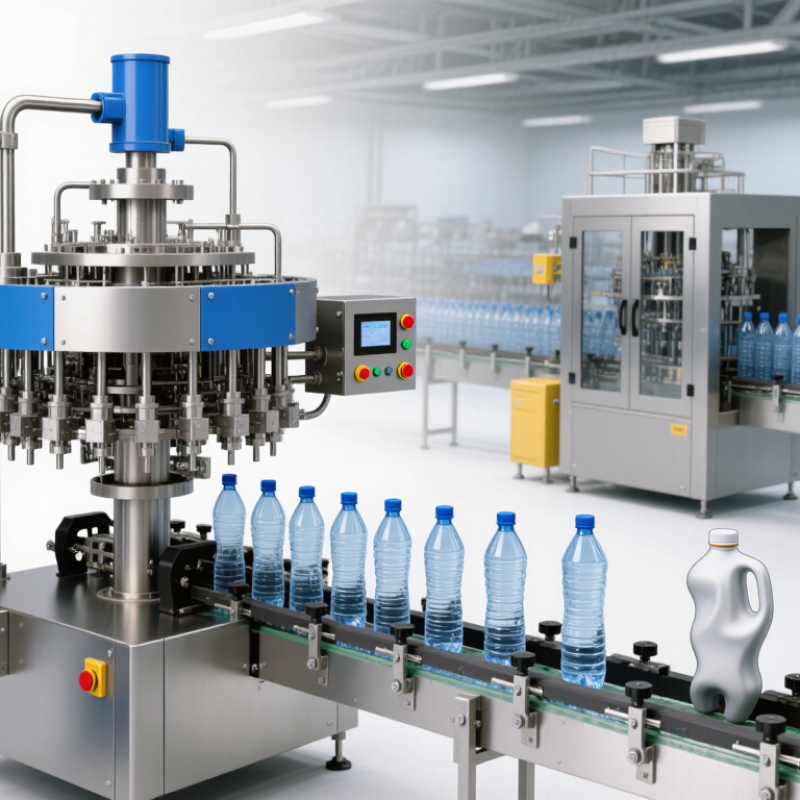
How to Choose Automatic Bottle Orienters for Your Business

Define Your Bottle Orientation Requirements

How to Choose Automatic Bottle Orienters for Your Business

Define Your Bottle Orientation Requirements

Start with the bottle, not the machine. Record height, diameter, neck finish, center of gravity, material, and surface friction. A 500-milliliter PET bottle may behave differently after filling. Test empty and filled containers separately.

Define the required orientation precisely. Does the cap face upward, or must the label face forward? Measure line speed in bottles per minute, including pauses and rejected containers. Also document acceptable misorientation, usually as a percentage. A rough test is better than a confident guess.

The first draft is rarely right. Include the smallest and largest bottle in your product range. Check changeover time, conveyor spacing, noise, cleaning access, and product-contact materials. Ask for performance evidence using your containers, not generic samples. PMMI’s 2024 State of the Industry report identifies labor availability and uptime as continuing automation pressures. These factors make simple adjustments and stable operation commercially important.

Integration requirements matter equally. Confirm conveyor height, available floor space, electrical supply, controls communication, and reject-handling logic. The International Federation of Robotics reported 541,302 industrial robot installations worldwide in 2023, a 10% annual increase. That growth reflects broader automation demand, but automation is not automatically suitable. A high-speed orienter can create bottlenecks if downstream equipment runs slower. Review three production scenarios: normal speed, peak demand, and frequent format changes. Then challenge your assumptions. The cheapest orientation target may not deliver the lowest operating cost.

Match Orienter Types to Container Shapes and Materials

Choosing an automatic bottle orienter starts with the container, not the machine frame. In production trials, I examine shape, neck finish, wall stiffness, and surface friction. A round PET bottle may run smoothly through centrifugal or rotary orienting equipment. Tall, narrow containers can wobble when speed rises. They often need guided pockets and controlled acceleration. Shape matters. For square or oval bottles, linear systems with dedicated rails can reduce twisting. However, guide pressure must stay gentle. Excess pressure can scuff thin walls or deform lightweight containers.

Material changes the operating risk. Rigid PET usually tolerates moderate speed, but thin sections may collapse under firm contact. HDPE containers can flex, especially near the shoulder, so wider supports and slower transitions may improve stability. Glass bottles require cushioned contact points, accurate spacing, and reliable breakage detection. Metal containers may slide differently because of their weight and smooth surfaces. Small changes in friction can affect orientation accuracy. I once underestimated this during a line trial. The machine performed well with dry containers but struggled after condensation appeared.

Do not trust a catalog photo alone. Test production samples, including bottles with realistic dimensional variation. Measure jams, scratches, noise, and recovery time after a misfeed. Check whether operators can adjust rails without special tools. A quick changeover is valuable. Not always easy. The best orienter should match the container’s actual behavior, not only its nominal shape. Revisit the choice after pilot testing. A small design assumption can become a daily production problem.

How to Choose Automatic Bottle Orienters

The chart shows a practical 1–5 suitability index for common orienter technologies across typical container shapes and materials. Higher scores indicate better handling stability, lower risk of scuffing or deformation, and easier orientation at higher line speeds. Vibratory systems are generally effective for rigid, stable containers; centrifugal systems suit lightweight round bottles; air systems are useful for lightweight PET containers; and unscrambling systems are preferred for larger or irregular containers.

Evaluate Speed, Accuracy, and Production Line Compatibility

How to Choose Automatic Bottle Orienters for Your Business

Speed matters, but matching the orienter to your real production rate matters more. A machine rated for 300 bottles per minute may perform poorly with lightweight containers. Test your smallest and largest bottle sizes at normal operating conditions. Watch for tipping, bridging, and unstable discharge. Short trials can hide problems.

Accuracy protects filling, capping, labeling, and inspection equipment downstream. Measure correctly oriented bottles over several production cycles, not just one minute. A reliable target is consistent performance with minimal misfeeds and gentle bottle handling. Check whether sensors detect missing, damaged, or incorrectly positioned containers. Small errors can become expensive stoppages.

Compatibility deserves careful review. Confirm the orienter’s conveyor height, bottle diameter range, neck shape, electrical controls, and available floor space. Ask for changeover times between bottle formats. Tool-free adjustments may reduce labor, but only if operators can set them accurately. During a plant trial, record noise, vibration, cleaning access, and recovery after a jam. These details often matter more than a polished specification sheet. I have seen promising equipment fail because its discharge timing conflicted with the existing conveyor. A spreadsheet is not enough. Leave room for imperfect bottles, uneven supply, and future format changes. Reliability comes from testing the complete line, not judging the orienter alone.

Compare Automation Features, Maintenance, and Safety

Choosing an automatic bottle orienter requires more than checking speed. Automation features must match your bottle shapes, line layout, and changeover frequency. Servo-driven positioning, vision inspection, and recipe storage can reduce manual adjustments. Remote diagnostics also help technicians identify sensor faults before production stops. MHI’s 2024 Annual Industry Report found that 55% of supply chain leaders planned to increase technology investment. That trend supports connected equipment, but connectivity alone cannot fix poor setup.

Maintenance details deserve equal attention. Ask for tool-free access, clear lubrication points, replaceable wear parts, and fault-history records. During factory trials, watch how quickly operators change guides and clean the feed system. A five-minute delay can become hours across multiple shifts. Request documented spare-parts lead times and realistic mean-time-between-failure data. A perfect uptime forecast is rarely honest. Real production dust, bottle scuffing, and inconsistent caps will expose weaknesses.

Tips:

Test the orienter with your worst bottle samples, not only new containers. Check guarding, interlocked doors, emergency stops, and safe restart procedures. ISO 12100 recommends formal machinery risk assessment, while OSHA machine-guarding guidance emphasizes preventing contact with moving parts. Confirm that the safety circuit stops hazardous motion, not merely the conveyor. Deloitte’s 2024 Smart Manufacturing Survey reported that 92% of respondents viewed smart manufacturing as important for competitiveness within three years. Still, operators need practical training. A sophisticated interface can confuse people at 2 a.m. Choose clarity over impressive screens.

Assess Costs, Supplier Support, and Long-Term Value

How to Choose Automatic Bottle Orienters for Your Business

Cost should mean more than the purchase price. Grand View Research valued the global packaging machinery market at USD 45.88 billion in 2023 and forecasts a 4.3% CAGR through 2030. This growth reflects rising automation demand, but a larger market does not guarantee better value. Compare throughput, changeover time, energy use, rejected bottles, and maintenance hours. For example, six percent downtime on a 2,400-bottle-per-hour line can remove 288,000 bottles from annual capacity, assuming one eight-hour shift for 250 days. That loss may exceed a cheaper machine’s initial saving.

Supplier support deserves equal scrutiny. PMMI’s 2024 State of the Industry report identifies labor availability and operating costs as continuing pressures for packaging companies. Ask whether remote diagnostics, operator training, manuals, and critical spare parts are included. Request documented response times. A useful supplier should explain sensor calibration beside the conveyor, not only during a sales presentation. Demand factory acceptance and site acceptance testing with your actual bottle shapes. Small details matter.

Long-term value depends on flexibility. Check whether guides, timing screws, and control software can handle future bottle sizes. Review five-year costs for parts, service visits, software updates, and production losses. The calculation can be imperfect. Your real reject rate may change with resin, temperature, or operator skill. Still, testing with your own containers is stronger than trusting a brochure. One overlooked issue remains common: a fast orienter can create downstream congestion. That mistake is expensive.

How to Choose Automatic Bottle Orienters for Your Business — Assess Costs, Supplier Support, and Long-Term Value
Indicative planning comparison for common automatic bottle-orienter configurations. Costs are typical budget ranges in USD for new equipment, excluding taxes, freight, installation, upstream/downstream packaging equipment, and custom tooling.
Orienter Configuration Typical Bottle Format Indicative Throughput Typical Equipment Cost Changeover Time Automation and Controls Supplier Support to Request Estimated Annual Maintenance Long-Term Value Profile Best-Fit Application Planning Score
(100)
Vibratory Bowl Orienter Rigid plastic or glass bottles with a stable shape; limited size variation 30–120 bottles/min US$12,000–35,000 20–45 minutes Basic sensors, vibratory control, simple PLC interface Sample-bottle testing, bowl tooling guidance, spare-parts list, remote troubleshooting Approximately 3–6% of equipment cost Low initial cost and simple operation; less flexible for frequent format changes Single-format, low-to-medium volume production 68
Rotary Disc Orienter Lightweight cylindrical, oval, or rectangular plastic bottles 60–180 bottles/min US$18,000–50,000 15–35 minutes Servo or variable-speed drive, photoelectric sensors, recipe settings Application trial, format-part design, commissioning support, operator training Approximately 3–6% of equipment cost Good balance between speed, footprint, and capital cost; tooling may be format-specific Consumer products, household chemicals, and personal-care lines 76
Inline Air Conveyor Orienter Lightweight PET or HDPE bottles that can be handled by air flow 100–300 bottles/min US$25,000–65,000 20–40 minutes Air-pressure control, bottle sensors, conveyor synchronization, PLC interface Air-consumption calculation, line-speed validation, noise assessment, installation support Approximately 4–7% of equipment cost High throughput with continuous operation; energy use and bottle geometry must be assessed High-volume lines using lightweight plastic containers 79
Servo Pocket Orienter Multiple bottle shapes and sizes requiring controlled positioning 100–240 bottles/min US$45,000–110,000 10–25 minutes Servo indexing, HMI recipes, electronic format management, line communication Factory acceptance testing, format validation, software backup, preventive-maintenance training Approximately 4–8% of equipment cost Higher capital cost but excellent repeatability, changeover control, and process visibility Multi-format operations with frequent production changes 88
Vision-Guided Orienter Irregular, transparent, printed, or orientation-sensitive bottles 60–180 bottles/min US$65,000–150,000 15–35 minutes Industrial cameras, inspection software, servo positioning, reject management Lighting and camera validation, image-library setup, false-reject testing, software support Approximately 5–10% of equipment cost Strong flexibility and quality control; requires skilled setup and software maintenance Premium packaging, regulated products, and complex bottle geometries 84
Integrated Monoblock Orienter Standardized bottles integrated with filling, capping, labeling, or conveying 120–400 bottles/min US$80,000–220,000 20–60 minutes Central PLC, synchronized servos, HMI recipes, safety circuits, production data access Full line-layout review, integration engineering, site acceptance testing, service-level agreement Approximately 4–8% of equipment cost High output and compact footprint; downtime can affect several connected processes Continuous high-volume production with limited bottle variation 86
Robotic Pick-and-Place Orienter Wide range of rigid containers, including unstable or difficult-to-handle shapes 40–160 bottles/min US$90,000–250,000 10–30 minutes Robotic motion control, vision option, recipe-based programming, safety scanning Robot programming, risk assessment, gripper validation, spare-gripper strategy, operator training Approximately 5–9% of equipment cost Very flexible and scalable; higher technical complexity and integration requirements High-mix production and difficult bottle-handling applications 82
Evaluation guidance: Compare total cost of ownership rather than purchase price alone. Include installation, format tooling, compressed-air or electrical consumption, operator training, spare parts, software support, preventive maintenance, and expected downtime. A practical supplier evaluation should also confirm bottle samples, guaranteed speed, acceptable reject rate, changeover procedure, warranty coverage, response time, and availability of critical replacement parts.

FAQS

How should I choose an automatic bottle orienter?

Start with the container, not the machine frame. Examine its shape, neck finish, wall stiffness, and surface friction. Test actual production samples. Catalog images can mislead.

Which orienter suits round bottles?

Round PET bottles often run smoothly through centrifugal or rotary systems. However, tall, narrow bottles may wobble at higher speeds. Guided pockets and controlled acceleration can improve stability.

How should square or oval bottles be handled?

Linear systems with dedicated rails can reduce twisting. Guide pressure must remain gentle. Excess pressure may scuff thin walls or deform lightweight containers.

Does container material affect orienter performance?

Yes, material changes flexibility, friction, and contact risk. Rigid PET usually tolerates moderate speed. HDPE may flex near the shoulder and need wider supports. Glass requires cushioning, accurate spacing, and breakage detection.

How can I test speed and accuracy properly?

Test the smallest and largest bottles at normal operating conditions. Watch for tipping, bridging, unstable discharge, and repeated misfeeds. One short trial is not enough.

What compatibility details should I check?

Confirm conveyor height, bottle diameter range, neck shape, controls, and floor space. Check discharge timing against the existing conveyor. A spreadsheet alone cannot reveal every problem.

How can I reduce jams and changeover delays?

Measure jam frequency and recovery time after misfeeds. Check whether operators can adjust rails without special tools. Tool-free changes help, but only when settings remain accurate.

What problems might appear during real production?

Condensation can change surface friction and reduce orientation accuracy. Noise, vibration, cleaning access, and uneven supply also matter. I once underestimated moisture. Dry testing looked better than reality.

Should I leave capacity for future bottle formats?

Yes, if space and adjustment ranges allow it. Leave room for imperfect bottles and future size changes. A small design assumption can become a daily production problem.

Conclusion

Choosing the right Automatic Bottle Orienters begins with clearly defining your bottle orientation requirements, including container size, shape, material, neck design, and the direction needed for downstream operations. Different orienter types are suited to different containers, so evaluate how well each system handles plastic, glass, lightweight, or irregularly shaped bottles without causing damage or jams. It is also important to consider required speed, positioning accuracy, and compatibility with your existing conveyors, fillers, cappers, and inspection equipment.

Beyond basic performance, compare automation features such as sensors, controls, changeover functions, and fault detection. A practical system should be easy to clean, maintain, and operate safely, with accessible components and reliable protective features. Finally, assess the total cost of ownership rather than focusing only on the initial purchase price. Energy use, maintenance needs, spare-part availability, supplier support, training, warranty coverage, and future production expansion all affect long-term value. A well-matched orienter can improve line efficiency, reduce downtime, and provide dependable performance as your business grows.

Alexander

Alexander

Alexander is a seasoned marketing professional whose expertise lies in illuminating the unique value propositions of our company's offerings. With a deep understanding of our products and their impact on our customers, he crafts insightful blog posts that not only keep our audience informed but......