
Industry Knowledge & Insights

Frain Machinery Blog

Latest Articles, Buying Guides, and Rental Strategies for Packaging & Processing

0%

Selecting the right High-Speed Case Packers is difficult for global buyers. Catalog speeds can exceed 30 cases per minute, but speed alone proves very little. A machine must also handle carton dimensions, product weight, line layout, and local service demands. This guide examines five leading case packers for demanding production environments. It focuses on practical performance, not impressive brochures.

Sean Riley, a senior director at PMMI, has described automation as “a journey, not a destination.” That view matters here. A case packer should support today’s output while allowing tomorrow’s changes. Servo-driven pickers, tool-free adjustments, recipe management, and gentle product handling can reduce downtime. Quick changeovers matter when a plant runs several package sizes each shift. Remote diagnostics may also shorten delays when a technician is several time zones away.

The comparison considers throughput, flexibility, integration, operator access, and total ownership cost. It also considers regional support and spare-parts availability. A machine running at 25 cases per minute may outperform a faster model if it stops less often. That detail is easy to miss. Energy use, noise, cleaning access, and safety design deserve equal attention. No ranking can remove every uncertainty. A model that looks perfect on paper may struggle with unstable cartons or uneven products. Buyers should test real samples before making a final decision. The following selection offers a useful starting point, though not a substitute for plant-specific validation.
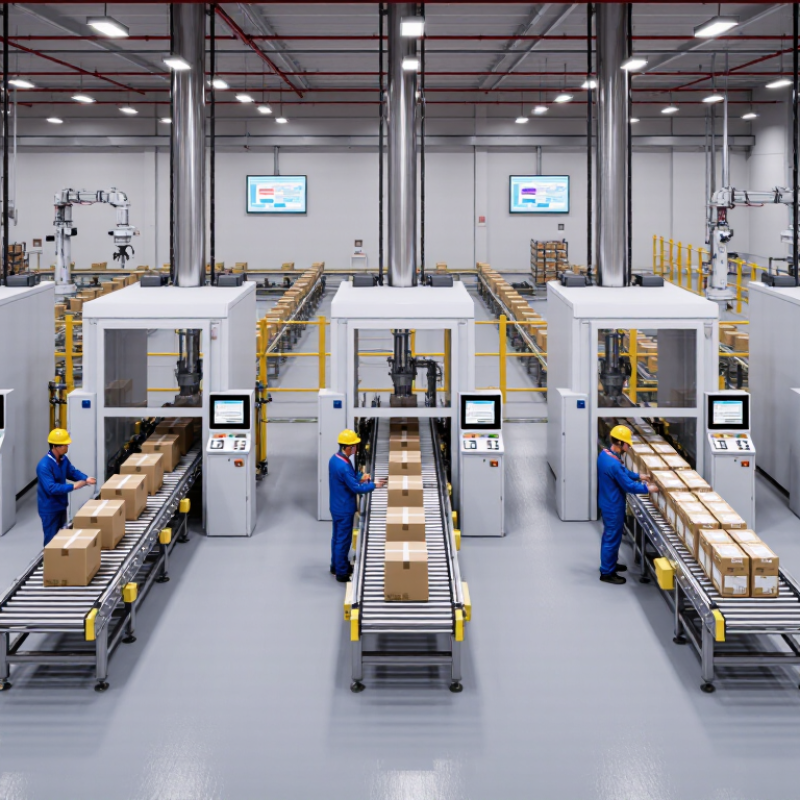
5 Best High Speed Case Packers for Global Buyers?

What Defines a High-Speed Case Packer?

What Defines a High-Speed Case Packer?

A high-speed case packer is not defined by cases per minute alone. It must maintain stable output while loading products, forming cases, closing flaps, and handling format changes. For global buyers, practical speed means usable throughput, not a laboratory number. A machine rated at 30 cases per minute may deliver less during mixed-size production. That gap deserves attention.

PMMI’s 2024 State of the Industry report identifies labor pressure, automation, and flexible production as major packaging investment drivers. Its U.S. market data also shows packaging machinery remains a multibillion-dollar industry. These figures support a clear buying principle: speed should reduce labor dependence without creating difficult maintenance. Look for servo-controlled motion, tool-free adjustments, accessible sensors, and recipe-based changeovers. Track cases per minute, changeover time, unplanned stops, reject percentage, and overall equipment effectiveness. The last metric is often ignored. It should not be.

Tips: Ask for a factory acceptance test using your actual products and cases. Request sustained performance, not a short peak-speed demonstration. Check whether operators can clear a jam safely within minutes. Confirm spare-parts availability in your region. A compact footprint also matters when floor space is expensive. High speed without reliable feeding is only a promise. Geological differences in cartons, humidity, and product dimensions can expose weaknesses. Therefore, independent validation remains wise, even when technical specifications look impressive.

How High-Speed Case Packers Work in Modern Packaging Lines

How High-Speed Case Packers Work in Modern Packaging Lines

A high-speed case packer receives products from an infeed conveyor and arranges them into precise groups. Sensors monitor spacing, orientation, and product flow. Servo-driven guides then move each group into an open shipping case. Timing matters. Even a small gap can disrupt the loading pattern.

Many machines erect flat cases, fold flaps, and prepare cartons before loading begins. A mechanical lane system may handle stable products, while robotic pickers suit delicate or irregular items. After loading, compression belts guide the case toward adhesive or tape sealing. Operators usually adjust recipes through a control panel for different case sizes.

Speed alone does not prove performance. A practical evaluation should measure changeover time, product damage, jam frequency, and accessible maintenance points. Small errors multiply. A poorly aligned sensor can stop an entire line. That assumption can fail.

For global buyers, flexible tooling and clear technical documentation are valuable. Electrical requirements, guarding, operator training, and spare-part availability need site-specific review. Factory acceptance tests should use real products and actual case dimensions. Short trials can hide problems. Longer production runs reveal heat, dust, and inconsistent product spacing. High-speed packaging works best when mechanical design, controls, and daily operating discipline support each other.

5 Best High-Speed Case Packer Configurations for Global Buyers

How high-speed case packers work in modern packaging lines: product loading, case forming, packing, sealing, and downstream palletizing are synchronized to maintain stable throughput. The chart compares representative maximum rated speeds commonly found across industrial packaging applications.

Interpretation: Continuous-motion systems generally deliver the highest throughput when product flow and case dimensions are consistent. Side-load and wraparound machines are widely used for cartons, trays, and retail-ready cases, while robotic systems provide greater format flexibility. Actual output depends on product stability, case size, changeover requirements, line accumulation, operator access, and the performance of upstream and downstream equipment.

Five Leading High-Speed Case Packer Options for Global Buyers

Five Leading High-Speed Case Packer Options for Global Buyers

Global buyers can compare five practical high-speed case packer formats. Robotic pick-and-place systems suit mixed products and frequent changeovers. Continuous-motion wraparound packers support stable cartons at high output. Intermittent-motion top-load packers offer simpler maintenance and lower entry costs. Side-load systems handle fragile products with controlled movement. Modular hybrid machines combine robotic loading, case forming, and automatic sealing. Each option needs careful testing. Product size, carton strength, and operator skill can change real performance.

Fortune Business Insights estimated the global packaging machinery market at approximately 52.83 billion US dollars in 2023. Its forecast shows continued expansion through 2032, driven partly by automation demand. PMMI’s 2024 industry reporting also highlights labor shortages and investment in flexible packaging equipment. Buyers should request factory acceptance tests using real products, not sample cartons alone. Watch the carton flap. It often reveals poor timing. Check compressed-air use, electrical standards, spare-part access, and remote diagnostics for each export market. A machine rated at 300 cases per minute may run slower after product variation, dusty packaging, or manual replenishment. That is the uncomfortable detail. The highest quoted speed is rarely the complete purchasing decision.

Key Performance Criteria: Speed, Flexibility, and Reliability

5 Best High Speed Case Packers for Global Buyers

High-speed case packers should be judged by usable output, not brochure speed. PMMI reports that U.S. packaging machinery shipments exceeded 10 billion dollars in recent years, reflecting strong automation demand. The 2024 World Robotics report recorded 541,302 industrial robots installed worldwide in 2023. These figures show the direction of modern factories: faster lines, fewer manual interventions, and tighter performance expectations.

The best options usually fall into five designs: intermittent-motion, continuous-motion, robotic pick-and-place, wraparound, and top-load systems. Intermittent machines suit stable products and controlled batches. Continuous-motion models deliver higher throughput, but require accurate product spacing. Robotic packers handle changing case patterns well. Wraparound systems can reduce materials, while top-load units simplify delicate product handling. Flexibility matters. Quick-change guides, recipe storage, tool-free adjustments, and vision inspection can shorten changeovers from hours to minutes.

Reliability is less visible than speed. Ask for verified OEE data, mean time between failures, sanitation access, and spare-parts response times. PMMI’s industry research repeatedly identifies labor availability as a major automation driver, yet automation cannot repair poor upstream flow. A fast packer still stops when cartons warp or products arrive unevenly. No machine is perfect. Factory trials should test real cases, mixed formats, dust, temperature changes, and operator handovers. A 95-case-per-minute claim may become 78 in production. That gap deserves measurement, not optimism.

5 Best High Speed Case Packers for Global Buyers? – Key Performance Criteria: Speed, Flexibility, and Reliability

Equipment Profile Typical Speed Suitable Case Formats Product Compatibility Changeover Capability Automation & Control Reliability Features Best-Fit Application
Top-Load Robotic Case Packer 30–60 cases/min Regular slotted cartons, wraparound cases, trays, and display-ready cases Bottles, cans, pouches, cartons, jars, and mixed product bundles Recipe-based servo adjustment; typically 10–25 minutes for a standard format change PLC, HMI, servo axes, vision inspection, and robot motion control Low mechanical contact, overload detection, carton-presence sensors, and controlled acceleration Flexible food, beverage, personal-care, and household-product lines
Side-Load Continuous-Motion Packer 40–80 cases/min Regular slotted cases and wraparound cases with horizontal product loading Cartons, trays, flow-wrapped products, pouches, and multipacks Guided tool-less adjustments; commonly 15–30 minutes depending on product range Continuous-motion servo system with synchronized infeed and case handling Positive product control, jam detection, automatic reject logic, and guarded drive systems High-volume lines requiring stable throughput and repeatable pack patterns
Wraparound Case Packer 50–100 cases/min Wraparound cartons, tray-plus-lid formats, and shelf-ready packaging Cans, bottles, cartons, pouches, and grouped retail packs Servo-guided format changes; usually 15–35 minutes for common case dimensions PLC-controlled forming, hot-melt adhesive control, servo timing, and recipe storage Carton blank monitoring, glue-temperature control, compression timing, and fault diagnostics Beverage, canned-food, dairy, and consumer-goods packaging
Intermittent-Motion Pick-and-Place Packer 25–70 cases/min RSC cases, trays, open-top cases, and partitioned cartons Fragile, irregular, unstable, or orientation-sensitive products Recipe selection with adjustable grippers; commonly 10–30 minutes Servo pick-and-place, programmable motion profiles, product tracking, and optional vision Soft grippers, torque monitoring, product-presence checks, and controlled start-stop cycles Products needing careful handling or multiple loading patterns
High-Speed Case Erecting, Packing & Sealing Cell 70–150 cases/min Standard RSC cases, pre-glued cartons, and selected wraparound formats Uniform bottles, cans, cartons, pouches, and high-volume multipacks Centralized recipes and servo format adjustment; commonly 20–40 minutes Integrated PLC, multi-axis servo control, automatic case handling, and line communication Redundant sensors, predictive-maintenance data, automatic fault recovery, and reject tracking Large-scale production where maximum throughput and line integration are priorities
Data note: Speed figures are representative operating ranges for comparable industrial case-packing configurations. Actual performance depends on product dimensions, case size, pack pattern, carton material, adhesive system, infeed stability, and required quality controls. Confirm the final rate through a product and packaging-material trial before purchase.

Global Purchasing Factors: Compliance, Service, and Total Cost

5 Best High Speed Case Packers for Global Buyers?

When comparing high-speed case packers, global buyers should assess five configurations: robotic, top-load, wraparound, side-load, and continuous-motion systems. Each suits different products, case styles, and factory layouts. A robotic packer offers flexible changeovers, while continuous-motion equipment can deliver higher output with stable carton sizes. I have found that speed claims often depend on ideal testing conditions. Real production includes dust, uneven cartons, operator changes, and short stops.

Compliance must be checked before purchase, not after installation. Request risk assessments, guarding details, electrical documentation, and manuals in the required language. Confirm that the machine can meet the destination market’s applicable safety and electrical requirements. This step reduces customs delays and costly site modifications. It also helps operators understand lockout procedures and emergency controls. Documentation matters more than glossy demonstrations.

Service capability directly affects total cost. Ask about remote diagnostics, technician response times, training, spare-parts stock, and software support across regions. A lower purchase price may become expensive when one sensor causes a three-day stoppage. Calculate energy use, labor, consumables, maintenance hours, tooling, and expected downtime. Include shipping and installation. Do not trust perfect payback forecasts. They need review. A practical factory acceptance test should use actual products, target cases, and realistic operating speeds. That evidence gives purchasing teams a more reliable basis for selecting equipment.

FAQS

What are the main high-speed case packer formats?

Common formats include robotic pick-and-place, top-load, side-load, wraparound, and continuous-motion systems. Each suits different products and cartons.

Which system suits frequent product changes?

Robotic systems handle mixed products and changing case patterns well. Recipe storage and quick-change guides can reduce setup time.

When is a continuous-motion packer a practical choice?

It suits stable products, uniform cartons, and high output. Accurate product spacing is essential. Small timing errors can stop the line.

Are intermittent-motion machines easier to maintain?

Usually, they offer simpler movement and lower entry costs. They work best with stable products and controlled production batches.

Which option may protect fragile products better?

Side-load and top-load systems can provide controlled movement. The correct choice depends on product shape, strength, and case design.

How should buyers judge machine speed?

Measure usable production output, not the quoted maximum. A machine rated for 300 cases per minute may run slower in real conditions.

What should a factory acceptance test include?

Use real products, actual cases, dust, mixed formats, and realistic operating speeds. Watch the carton flaps. Poor timing often appears there.

Which service details should global buyers check?

Ask about remote diagnostics, technician response times, training, spare parts, and software support. One failed sensor can cause a long stoppage.

What compliance documents are important before installation?

Request risk assessments, guarding details, electrical documents, manuals, and emergency-control information. Requirements vary by destination market.

How can buyers calculate the true equipment cost?

Include energy, labor, maintenance, tooling, shipping, installation, consumables, and downtime. Perfect payback forecasts need skepticism and regular review.

Conclusion

High-Speed Case Packers are essential for modern packaging lines that need to move large volumes of products into shipping cases quickly, accurately, and consistently. This article explains what makes a case packer “high speed,” including rapid product handling, synchronized case forming, precise loading, and reliable sealing. It also describes how these machines integrate with conveyors, robotic systems, sensors, and control software to maintain smooth production while reducing manual labor and packaging errors.

For global buyers, the article compares five types of high-speed case packer options based on output capacity, product flexibility, changeover time, footprint, and ease of operation. It also highlights key purchasing criteria such as equipment reliability, hygiene-focused design, safety features, documentation, technical support, spare-parts availability, and compliance with applicable market requirements. By evaluating total ownership cost—not only the initial purchase price—buyers can select a durable, adaptable, and efficient solution that supports long-term production goals.

Alexander

Alexander

Alexander is a seasoned marketing professional whose expertise lies in illuminating the unique value propositions of our company's offerings. With a deep understanding of our products and their impact on our customers, he crafts insightful blog posts that not only keep our audience informed but......