
Frain Machinery Blog
Latest Articles, Buying Guides, and Rental Strategies for Packaging & Processing
10 Best Automated Cartoning Equipment Suppliers 2026
Cartoning may look simple: a carton opens, a product drops in, and the package closes. On a real line, timing, product variation, carton quality, and changeovers can make that sequence surprisingly demanding. For manufacturers comparing Automated Cartoning Equipment suppliers in 2026, the right choice depends on more than advertised speed. Integration, service access, operator training, and reliable performance across actual products matter just as much.
The wider market offers useful context, but not a direct measure of cartoner demand. Grand View Research valued the global packaging machinery market at approximately USD 45.3 billion in 2023 and forecast growth through 2030. This figure covers many machinery categories, so it should not be mistaken for a cartoning-equipment estimate. PMMI’s 2024 State of the Industry reporting also provides broader insight into packaging machinery and manufacturer priorities. Labor availability, production flexibility, and automation remain relevant pressures. The numbers help frame the market. They do not pick a supplier.
This guide compares ten suppliers using practical questions: Can the machine handle your carton sizes and product formats? How long does a changeover take? Is technical support reachable when a line stops? Ask for references and a product-specific test, not only a polished demonstration. A fast machine on a showroom floor may behave differently beside a busy filling line. No supplier is perfect. The best fit is the one whose capabilities, service, and documented performance match your plant’s needs.
Understanding Automated Cartoning Equipment
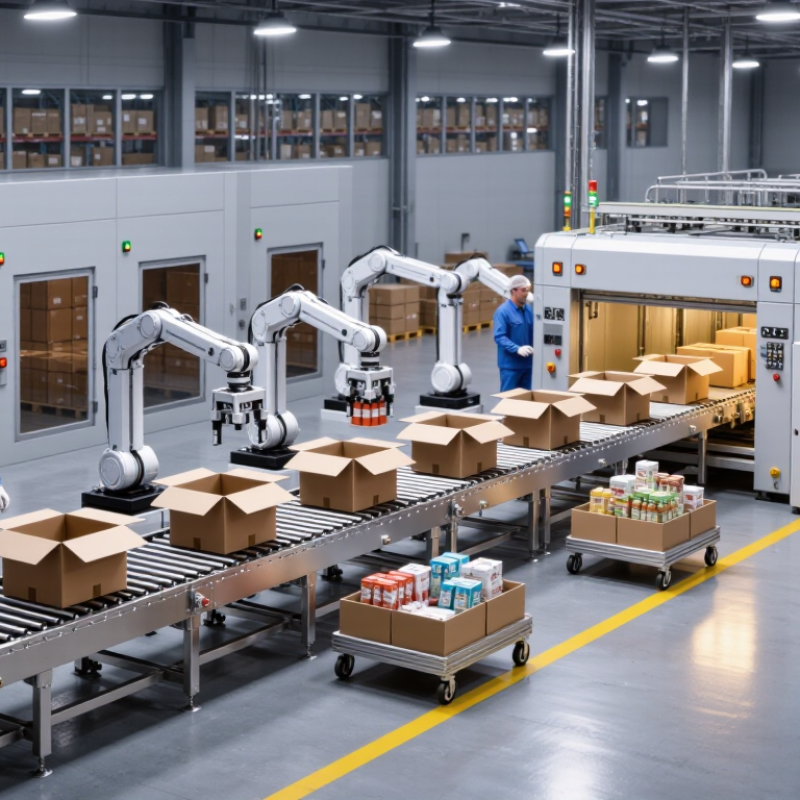
Automated cartoning equipment forms cartons, loads products, and closes packages with limited manual handling. A typical line may include a carton magazine, opening station, product infeed, and closing mechanism. Sensors check whether cartons are present and correctly positioned. When a carton fails to open, the machine can stop before misplaced products create a larger jam. Small details matter.
Product shape affects the whole process. A rigid bottle, soft pouch, and group of tubes each need different guides and loading methods. Operators often adjust rails, timing, and carton dimensions during changeovers. If those adjustments are awkward, a fast machine can still lose time between runs. Watch an actual changeover, not just a demonstration at steady speed.
Before comparing suppliers, define the products, carton styles, and expected production range. Ask how the system handles empty cartons, misfeeds, and routine cleaning. Check whether operators can reach wear parts without removing large guards or waiting for specialized tools. Training matters. So does clear documentation. A line may meet its rated speed under ideal conditions, yet perform differently with variable carton quality or frequent product changes. That gap deserves a closer look.
How Automated Cartoning Systems Work
An automated cartoning line turns flat carton blanks into sealed packs through a coordinated sequence. A feeder separates each blank from a magazine, and suction cups transfer it to an erecting station. Folding rails shape the carton; mechanical guides or hot-melt adhesive secure its base. Product arrives on a conveyor, where sensors track spacing and timing. A pick-and-place unit, robotic arm, or flighted conveyor loads items into each open carton. The machine then folds or glues the top flaps and discharges the finished pack.
Timing matters. Photoelectric sensors detect gaps or misaligned cartons, while servo drives adjust motion to match product flow. Operators set carton dimensions and pack counts through a control interface, then verify samples during changeovers. Some systems add print-and-verify units or checkweighers. These features catch errors, but they cannot compensate for poorly formed blanks or inconsistent product spacing. In its World Robotics 2024 report, the International Federation of Robotics counted 4,281,585 industrial robots operating worldwide in 2023, a 10% increase from the prior year. The figure reflects broad automation adoption, not cartoners alone. A useful reality check: more automation still requires skilled setup, cleaning, and troubleshooting.
Criteria for Comparing Suppliers in 2026
In 2026, comparing automated cartoning equipment suppliers means looking beyond cartons per minute. Ask how each machine handles your carton board, product dimensions, and changeover pattern. Request a test run with representative samples, then inspect glue seams, carton squareness, and reject handling. Small details matter. A machine rated for 120 cartons per minute may run slower when operators change formats or replenish blanks. Compare usable output, not just headline speed.
Tips: Bring several carton sizes and a typical product load to the factory test. Record changeover time, jam frequency, and recovery steps. Ask for a written list of wear parts and service intervals. A short test helps, but it may not reveal every issue.
Check whether the controls can connect with your existing line and whether operators can understand alarms without guesswork. Review spare-part availability, remote support hours, training, and maintenance documentation. Compare the full cost of installation and upkeep, not only the purchase price. It is easy to overvalue a polished demonstration; real production conditions are less tidy. Ask for references from facilities with similar products, and verify that the proposed layout fits your floor space and staffing.
| # | Comparison Criterion | What to Compare | Evidence to Request | Suggested Evaluation Weight |
|---|---|---|---|---|
| 1 | Carton and product compatibility | Supported carton styles, product dimensions, feeding method, and changeover requirements for the intended SKU range. | Written format range, sample-carton trial results, and a documented list of excluded formats. | 15% |
| 2 | Rated and demonstrated output | Quoted cartons per minute for the buyer’s product and carton format; distinguish rated speed from sustained production speed. | Factory acceptance test (FAT) protocol and results using representative materials and products. | 12% |
| 3 | Changeover and adjustability | Time, tools, and operator steps needed to change between the buyer’s carton sizes and product configurations. | Timed changeover demonstration, adjustment instructions, and details of any quick-change components. | 10% |
| 4 | Integration capability | Interfaces with upstream product handling and downstream case packing, inspection, serialization, or plant controls. | Interface list, layout drawings, control architecture, and responsibility matrix for line integration. | 10% |
| 5 | Quality and reject handling | Detection and handling of missing products, incorrectly formed cartons, or other specified packaging defects. | Inspection-system description, reject-challenge test, and documented reject confirmation method. | 10% |
| 6 | Operator safety and compliance | Machine guarding, safety interlocks, emergency stops, risk assessment, and documentation for the installation location. | Applicable conformity documentation, risk assessment, safety-component list, and operating instructions. | 10% |
| 7 | Reliability and maintainability | Access to wear parts, routine maintenance tasks, fault diagnostics, and the supplier’s method for reporting performance. | Maintenance schedule, recommended-spares list, troubleshooting documentation, and reference-site performance data where available. | 10% |
| 8 | Service and spare-parts support | Service coverage for the installation region, support hours, escalation process, and parts availability commitments. | Written service-level terms, regional support details, spare-parts lead-time policy, and training plan. | 8% |
| 9 | Total cost of ownership | Equipment price plus installation, tooling, training, utilities, consumables, maintenance, and expected operating costs. | Itemized quotation, utility requirements, lifecycle-cost assumptions, and clearly stated exclusions. | 8% |
| 10 | Project delivery and acceptance | Lead-time assumptions, project milestones, site-readiness needs, commissioning scope, and measurable acceptance criteria. | Project schedule, scope of supply, FAT/SAT plan, training deliverables, and agreed acceptance protocol. | 7% |
| Total suggested evaluation weight | 100% | |||
Use the same product samples, carton specifications, test conditions, and scoring scale for every shortlisted supplier. The suggested weights are a customizable buyer evaluation framework, not supplier performance data.
Profiles of 10 Automated Cartoning Equipment Suppliers
The ten supplier profiles are best compared by the jobs their machines handle. IFR’s World Robotics 2024 report recorded 541,302 industrial robot installations in 2023, with more than 4.28 million robots operating worldwide. That broader automation trend matters: modern cartoners increasingly coordinate product feeding, carton erection, loading, and case packing. Profile one is the high-speed line integrator; two specializes in compact machines for limited floor space; three serves frequent carton-size changes; four focuses on robotic loading; five builds systems for fragile products. Look closely at actual changeover time, not only quoted maximum speed.
Profile six is strongest in modular equipment; seven supports mixed product formats; eight emphasizes operator-friendly controls; nine provides detailed remote diagnostics; ten designs custom feeding systems for irregular products. Their differences matter on a real factory floor, where carton blanks may curl and products may arrive unevenly. A demonstration helps. Still, a polished demo can hide awkward cleaning or slow changeovers. Ask suppliers to run your cartons and products, then measure jams, reject rates, and restart time. These checks make comparisons more dependable than headline output figures, though no test fully predicts everyday production.
Choosing a Supplier for Your Packaging Requirements
Choosing a cartoning supplier starts with the product, not the machine brochure. Record carton dimensions, board grade, closure style, and the actual range of product sizes. Then compare target speed with changeover time, operator access, and available floor space. Small details matter. Ask suppliers to test your cartons and products, including unusual sizes and restart conditions. Request recorded results for throughput, reject rate, and changeover duration.
Automation is expanding. The International Federation of Robotics reported 4.28 million industrial robots operating worldwide in 2023, 10% more than in 2022, in World Robotics 2024. That figure covers many industries, not cartoning alone, but it offers useful context for evaluating automation capabilities. Compare suppliers on integration support, spare-parts access, training, and service response times—not just quoted speed. Ask who will handle recipe setup and fault recovery after installation. Review maintenance steps with the people who will run the line. Total cost matters. Include tooling, installation, utilities, service, and planned downtime in your comparison. A polished demonstration can hide a difficult changeover, so agree on acceptance criteria that both sides can verify.
Automated Cartoning Equipment: Indicative Speed Ranges
Use these broad planning ranges to frame supplier discussions. Actual speeds depend on carton design, product handling, changeovers, and line configuration; verify performance against your requirements.
Indicative ranges are general planning estimates, not specifications or performance claims for any supplier or machine.
FAQS
Suction cups lift one flat blank from a magazine. Folding rails shape it, and guides or adhesive secure the base.
A pick-and-place unit, robotic arm, or flighted conveyor places products inside. Sensors help coordinate product spacing and carton timing.
It folds or glues the top flaps, then sends the finished pack to the discharge area. Small timing errors can still cause trouble.
Photoelectric sensors detect gaps and misaligned cartons. They cannot fix poorly formed blanks or uneven product spacing.
Set the carton dimensions and pack count, then inspect sample packs. A quick check may miss a slow restart or a sticking flap.
Measure real changeover time, jams, reject rates, and restart time. Maximum speed alone tells only part of the story.
Ask for a trial using your own cartons and products. Watch cleaning and changeovers closely; a polished demonstration may not show everyday snags.
No. Operators still handle setup, cleaning, and troubleshooting. Automation helps, but it does not make production effortless.
Conclusion
This guide explores Automated Cartoning Equipment and its role in packaging operations, from the basic machine types to the steps involved in forming cartons, loading products, and sealing packages. It explains how automated systems coordinate these tasks to support consistent output and reduce manual handling, while noting that configurations vary according to product shape, carton style, and production needs.
The article also presents practical criteria for comparing suppliers in 2026, including equipment flexibility, operating speed, changeover requirements, service support, and integration with existing lines. Profiles of ten supplier options offer a structured starting point for research without assuming that one solution suits every business. The final section helps readers match equipment capabilities and supplier support to their packaging requirements, so they can make a considered choice based on production goals, available space, and long-term operational needs.

Blog Tags: