Frain Machinery Blog
Latest Articles, Buying Guides, and Rental Strategies for Packaging & Processing
Choosing the right Industrial Shrink Banders has become a practical investment decision for global buyers. Packaging lines now face stricter quality expectations, changing labor costs, and shorter product runs. A suitable machine must protect tamper evidence without creating unnecessary material waste.
Smithers’ “The Future of Global Packaging to 2028” identifies sustainability, automation, and packaging efficiency as major industry forces. Grand View Research also reports continued growth in the global packaging machinery market through 2030, supported by food, beverage, pharmaceutical, and personal-care production. These reports do not measure every shrink-banding application separately. That limitation matters.
This guide compares leading Industrial Shrink Banders through measurable buying criteria. These include application speed, band placement accuracy, sealing temperature control, changeover time, material compatibility, and after-sales support. A machine running 80 containers per minute may appear impressive. However, unstable feeding or frequent film adjustment can reduce real output on a busy line.
Experience shows that operators notice small details first. A clear control panel helps during shift changes. Tool-free access can shorten cleaning. Consistent tunnel temperature protects delicate labels and narrow bands. Energy use also deserves attention, especially where machines operate continuously.
No ranking is perfect.
Supplier claims require verification through factory trials, sample testing, and reference checks. Buyers should request actual throughput data, not only brochure speed. Local service coverage, spare-parts availability, and compliance documentation should receive equal weight.
The 2026 selection should therefore focus on dependable total performance, not the lowest purchase price. This introduction establishes a practical framework for evaluating Industrial Shrink Banders across regional markets, production scales, and packaging requirements.
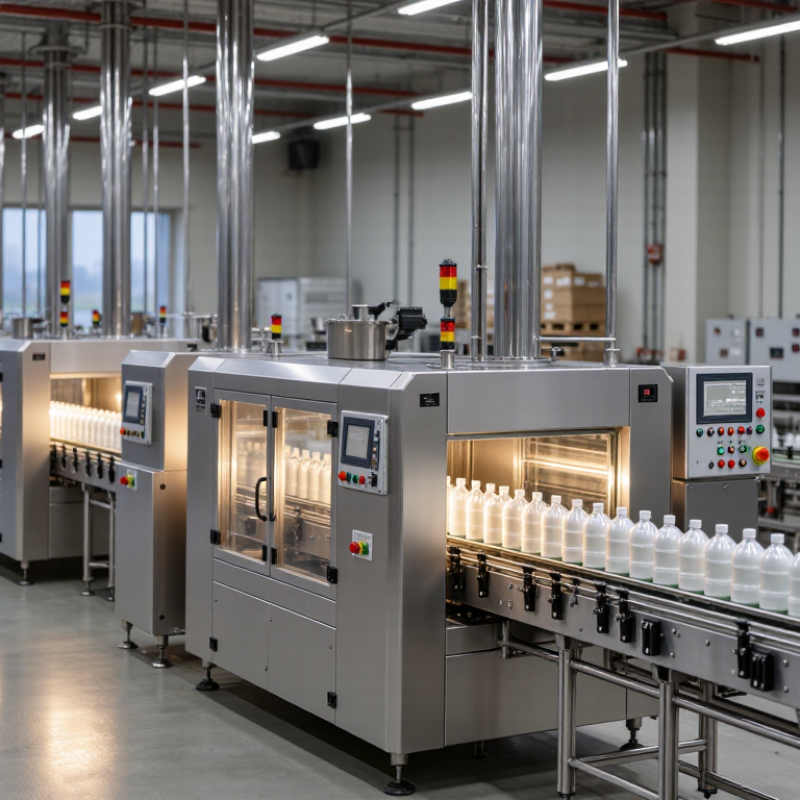
What Industrial Shrink Banders Are and How They Work
Industrial shrink banders apply a heat-shrinkable film around a bottle neck, cap, or container closure. The band tightens when exposed to controlled heat. It can show opening attempts and protect the closure from dust, moisture, and handling damage.
A typical system includes a film unwinder, cutting blade, band applicator, and shrink tunnel. Sensors track container spacing and cap position. Heat then activates the film without directly touching the product. On a production line, poor alignment can leave a loose edge or a wrinkled band. Small errors matter. PMMI’s 2024 Global Packaging Trends report identifies automation, labor availability, and uptime as major packaging investment drivers. These factors make automatic banders attractive for high-volume operations. Yet speed alone is not enough. A machine running at 300 containers per minute may waste material when changeovers are poorly controlled. This is an uncomfortable detail.
Material selection also affects performance. Thin films reduce consumption, while thicker films may improve handling strength. Smithers’ packaging outlook reports continued pressure to reduce material use and improve packaging efficiency through 2028. Buyers should verify tunnel temperature, dwell time, container stability, and film compatibility before purchase. Line trials are more reliable than brochures. Operators should inspect seal quality under normal humidity and temperature changes. A neat specification can still fail in real production. Energy use deserves attention too, because poorly insulated tunnels can increase operating costs and workplace heat.
2026 Top Industrial Shrink Banders for Global Buyers - What Industrial Shrink Banders Are and How They Work
Comparative guide to common industrial shrink bander configurations, operating ranges, materials, and application requirements. Figures are typical industry ranges and should be confirmed against the container, band material, and production line design.
| Industrial Bander Configuration | Typical Output | Container Compatibility | Common Band Material | Band Size Range | Shrink Activation Method | Typical Utilities | Best-Fit Applications |
|---|---|---|---|---|---|---|---|
| Semi-Automatic Single-Head Bander | Approximately 15–40 containers per minute | Round, oval, square, and rectangular containers with controlled positioning | PVC, PETG, or OPS shrink film; pre-cut or roll-fed bands | Typical band height: 20–80 mm; diameter depends on the container | Hot-air tunnel or localized hot-air nozzle | Electrical power; compressed air may be required for pneumatic controls | Small and medium production runs, frequent format changes, and secondary tamper-evident packaging |
| Automatic Inline Single-Head Bander | Approximately 40–120 containers per minute | Stable, continuously conveyed containers with consistent neck or cap geometry | PETG, PVC, or OPS film supplied as a continuous roll | Typical band height: 20–100 mm | Integrated hot-air shrink tunnel or focused hot-air system | Electrical power, conveyor drive, and usually compressed air | Continuous packaging lines for food, personal care, household, and healthcare products |
| Automatic Rotary Multi-Head Bander | Approximately 100–300 containers per minute | Uniform containers presented by starwheel, timing screw, or rotary indexing system | Roll-fed PVC, PETG, or OPS shrink film | Typical band height: 20–80 mm; multiple container diameters require change parts | Multi-zone hot-air tunnel or rotary hot-air chambers | Electrical power and compressed air; conveyor and product handling systems | High-volume production where consistent placement and repeatable shrink quality are required |
| Steam Shrink Bander Line | Approximately 60–250 containers per minute | Glass, plastic, and metal containers that can tolerate controlled moisture exposure | Steam-compatible PVC, PETG, or OPS shrink film | Typical band height: 20–100 mm | Low-pressure saturated steam applied through a controlled steam tunnel | Steam supply, water treatment or condensate management, electrical power, and drainage | Products requiring uniform shrink around irregular profiles or reduced hot-air exposure |
| Hot-Air Shrink Tunnel Bander | Approximately 30–180 containers per minute | Containers with sufficient thermal resistance and stable conveyor handling | Commonly PVC, PETG, and OPS shrink films | Typical band height: 20–120 mm | Recirculated heated air with adjustable temperature and airflow zones | Electrical power; exhaust ventilation may be needed depending on film and line design | Flexible installation, moderate-to-high output, and applications without an available steam system |
| Tamper-Evident Neck Bander | Approximately 40–250 containers per minute, depending on the feeding system | Bottles, jars, tubs, and other containers with a cap, lid, or closure area | PETG, PVC, or OPS shrink film selected for controlled tear and shrink behavior | Typical band height: 20–60 mm | Hot air or steam, selected according to the film and container design | Electrical power; compressed air is common on automated models | Visible tamper evidence, closure protection, promotional bands, and regulatory packaging requirements |
| Roll-Fed Film Bander with Integrated Cutting | Approximately 50–200 containers per minute | Containers with repeatable circumference and a defined application height | Continuous shrink film on rolls, usually PVC, PETG, or OPS | Typical band height: 15–120 mm; cut length is electronically or mechanically controlled | Hot-air or steam shrink system after film cutting and application | Electrical power, film unwind control, and compressed air on many systems | Reduced manual loading, accurate band length, and integration with upstream filling or capping equipment |
| Pre-Cut Band Applicator | Approximately 20–100 containers per minute | Products with stable container dimensions and predefined band specifications | Pre-cut PVC, PETG, OPS, or other approved shrink-film bands | Typical band height: 20–100 mm | Localized hot air, hot-air tunnel, or steam tunnel | Electrical power; compressed air may be used for pick-and-place or pneumatic handling | Short runs, multiple band designs, reduced film-waste targets, and quick material changes |
How industrial shrink banders work: The machine feeds or receives a shrink band, positions it around the container neck or designated package area, and then applies controlled heat or steam. The film contracts around the container to create a tight, visible band. Actual speed and performance depend on container geometry, band dimensions, film grade, shrink ratio, line layout, heat profile, and operator settings.
FAQS
Look for accurate feeding, stable heat, repeatable placement, and practical uptime. A touchscreen should display speed, temperature, alarms, and production counts.
Steam tunnels provide gentle, even heating around glass jars and delicate packages. Drainage and moisture control remain important.
Hot-air systems suit standard bottles, caps, and medium-volume production lines. They need no steam supply.
Reflective containers may heat unevenly under infrared energy. Test the actual container before accepting a short tunnel design.
Recipe storage helps operators repeat settings for multiple formats. Tool-free guides can shorten changeovers. Sometimes, adjustment still takes longer than expected.
Not always. Film type, container shape, operator loading, and upstream stability affect output.
Run real containers and production materials, not only polished demonstrations. Check wrinkles, loose edges, skewed seals, jams, and cooled band coverage.
Inspect emergency stops, guarded hot zones, cleaning access, spare sensors, and readable maintenance instructions. Small faults can stop an entire shift.
No. Inline systems need stable cap placement and consistent film feeding. Semi-automatic equipment may suit smaller batches and frequent format changes.
Conclusion
This guide to Industrial Shrink Banders explains how these machines apply, heat, and securely seal shrink bands around containers, helping manufacturers improve product protection, tamper evidence, and packaging consistency. It reviews the key features buyers should assess in 2026, including band placement accuracy, heating control, operating speed, container compatibility, automation options, energy efficiency, safety systems, and ease of adjustment. It also introduces different machine types suited to varied production volumes, container shapes, packaging materials, and line configurations.
For global purchasing, the guide outlines practical comparison criteria such as total operating cost, output capacity, integration requirements, spare-parts availability, technical support, and machine adaptability. It also highlights essential considerations for installation, operator training, routine cleaning, preventive maintenance, fault checking, and safe working procedures. By evaluating performance, reliability, usability, and long-term service needs together, buyers can select a shrink banding solution that supports efficient, consistent, and responsible packaging operations.