
Frain Machinery Blog
Latest Articles, Buying Guides, and Rental Strategies for Packaging & Processing
2026 Best Sanitation Products Filling Equipment Types?
Table of Contents
- What Are Sanitation Products Filling Equipment?
- How Do Different Filling Machines Work?
- Which Filling Equipment Types Suit Specific Sanitation Products?
- What Materials and Hygiene Standards Should Be Considered?
- How Should Businesses Select and Maintain Filling Equipment?
- FAQS
- Conclusion
- Related Posts
Choosing the 2026 best Sanitation Products Filling Equipment requires more than comparing prices or advertised speeds. In a working plant, a filling machine must handle product viscosity, container shape, cleaning routines, and production volume without creating avoidable delays. Operators notice small details, such as dripping nozzles, difficult seals, or liquid trapped beneath a conveyor guide.
This guide examines piston, peristaltic, gravity, overflow, and servo-driven filling systems for sanitation products. Each type offers practical strengths. Piston fillers suit thicker creams and gels, while peristaltic systems can reduce product contact with internal machine parts. Overflow fillers often create consistent levels in transparent bottles. Servo-controlled equipment can improve repeatability, but it usually demands stronger technical support and a higher initial investment.
Real production experience matters here. A machine that performs well during a short demonstration may struggle after eight hours of continuous operation. That difference is important. We will consider cleaning access, material compatibility, dosing accuracy, changeover time, operator training, and maintenance records. Stainless steel construction alone does not guarantee hygienic performance. Poorly designed joints can still collect residue.
The “best” choice is not universal. It depends on your formula, packaging line, workforce, and quality controls. Some recommendations may need revision after testing actual products. That is worth admitting. Reliable decisions should combine supplier documentation, factory trials, measurable filling results, and advice from qualified equipment engineers. This approach helps buyers select sanitation filling technology that remains practical, maintainable, and dependable through 2026.
What Are Sanitation Products Filling Equipment?
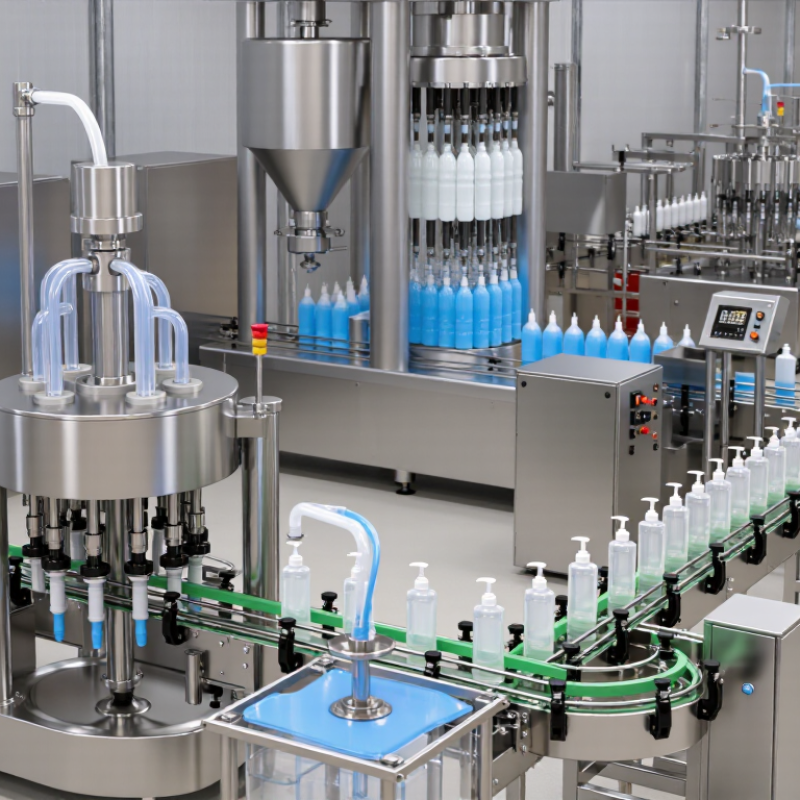
Sanitation products filling equipment is machinery designed to measure and package hygienic liquids, gels, and foams. Common products include hand wash, surface cleaners, liquid soap, and approved disinfectants. The equipment transfers each formula into bottles, pouches, or containers with controlled volume and minimal exposure. It supports cleaner production areas and more consistent packaging.
The main equipment types include piston fillers, pump fillers, gravity fillers, and overflow fillers. Piston systems suit thicker products, such as gels and concentrated cleaners. Pump fillers handle liquids with changing viscosity. Gravity fillers work well with free-flowing formulas. Overflow fillers help create an even liquid level, which improves shelf appearance.
Some lines combine filling, capping, sealing, and labeling equipment to reduce manual handling.
A hygienic filler should have smooth contact surfaces, accessible parts, and materials compatible with the formula. Stainless steel construction is common, but material selection still needs technical review. Clean-in-place systems can reduce disassembly, while careful manual inspection remains necessary. I have found that small nozzle drips often reveal larger setup problems. Fill accuracy should be checked with calibrated scales, repeated samples, and documented records. Operators also need practical training, not only written procedures. A fast machine is not automatically the best choice. Product viscosity, foaming behavior, container shape, cleaning method, and production volume must be assessed together. Some installations look efficient on paper but require too much adjustment during real operation.
How Do Different Filling Machines Work?
Choosing filling equipment in 2026 starts with product behavior, not container appearance. Liquid sanitation products may flow like water, syrup, foam, or suspended mixtures.
Gravity fillers use a raised tank and controlled valves. They suit thin liquids with predictable viscosity.
Overflow fillers keep the liquid level visually consistent. This helps retail bottles look uniform, even when internal volume varies slightly. The method is simple, but foaming can slow production.
Piston fillers draw a measured volume into a cylinder, then push it into each container. They handle gels, concentrates, and thicker liquids with strong repeatability.
Operators must adjust piston speed and nozzle height to limit dripping and air pockets.
Peristaltic pumps move liquid through flexible tubing without direct pump contact. This design can support hygienic changeovers and sensitive formulas. However, tubing wear may affect accuracy. It is easy to overlook. Not always.
Auger fillers meter powders by rotating a screw inside a hopper. They work for dry sanitation powders when the material feeds evenly. Humidity can cause bridging, clumps, and inconsistent doses.
For every machine, sanitation depends on accessible product paths, validated cleaning, and documented checks.
I would test the actual formula at its working temperature. Small changes matter.
A machine that performs well with water may struggle with a foaming concentrate.
Verify fill weight, seal condition, nozzle cut-off, and restart behavior before routine production.
Human inspection still catches problems sensors miss.
Which Filling Equipment Types Suit Specific Sanitation Products?
Choosing filling equipment for sanitation products depends on viscosity, foaming behavior, container shape, and cleaning requirements. Thin hand sanitizers and liquid disinfectants usually suit gravity or overflow fillers. Overflow systems help maintain a consistent visual level in clear bottles. Thick gels and concentrated cleaners often need piston fillers with larger valves. These systems handle higher viscosity more steadily, though their moving parts require careful inspection.
Foam-prone formulas may benefit from diving nozzles or controlled-speed pumps. The nozzle enters the container and reduces splashing during filling. Peristaltic pumps can support sensitive formulas because the product contacts only the tubing. They also simplify changeover between batches. However, tubing wear can affect accuracy, especially after repeated cleaning cycles. That limitation is easy to overlook. Small details matter. Container openings, cap placement, and drip control also influence line performance. A practical trial with the actual formula is more reliable than selecting equipment from viscosity data alone.
Tips: Test the product at different temperatures before choosing a filler. Cold gel may move slowly, while warm liquid may foam more easily. Use sanitary materials and tool-free components where possible. Record fill-weight results, cleaning time, nozzle behavior, and operator handling during trials. Leave room for adjustment. A machine that works well in a short demonstration may perform differently during an eight-hour production run. Regular calibration and documented cleaning checks help maintain repeatable output and support dependable quality decisions.
2026 Best Sanitation Products Filling Equipment Types? - Which Filling Equipment Types Suit Specific Sanitation Products?
| Filling Equipment Type | Best-Suited Sanitation Products | Typical Product Viscosity | Recommended Filling Principle | Typical Container Formats | Typical Accuracy Range | Hygienic Design Requirements | Cleaning and Changeover Considerations | Key Advantages | Important Limitations |
|---|---|---|---|---|---|---|---|---|---|
| Overflow Filler | Liquid hand soap Body wash Shampoo Low-viscosity disinfectants | Approximately 1–1,000 mPa·s | Liquid is recirculated until it reaches a consistent level in each container. | Transparent or semi-transparent bottles, narrow-neck bottles, and personal-care containers | Typically ±0.5% to ±1.0% of the target fill volume | 316L stainless-steel product-contact parts, sanitary tubing, polished surfaces, and drip-control nozzles | Useful when the visible fill level must match across containers. Recirculation lines should be drained and sanitized between incompatible products. | Consistent visual fill height and good handling of foaming liquids | Not ideal for highly viscous creams, products containing particles, or containers with substantially different internal shapes |
| Time-Pressure Filler | Alcohol-based hand sanitizer Liquid disinfectant Surface sanitizer Low-viscosity detergents | Approximately 0.5–500 mPa·s | Compressed air or controlled pressure pushes product through calibrated filling nozzles for a preset time. | Small bottles, trigger-spray bottles, pump bottles, and jerrycans | Typically ±0.5% to ±1.5% of the target fill volume | Closed product path, solvent-compatible seals, grounded components where flammable alcohol is used, and hygienic drainability | Fast to rinse and suitable for frequent product changes. Pressure vessels and air lines must be kept dry and clean. | Simple construction, fast operation, and relatively low product hold-up | Accuracy can change with viscosity, temperature, pressure stability, and foaming behavior |
| Piston Filler | Thick liquid soap Shampoo Sanitizing gel Disinfectant cream Barrier cream | Approximately 100–100,000 mPa·s | A piston draws a measured volume into a cylinder and discharges it through a product nozzle. | Jars, bottles, tubes, pails, and wide-mouth containers | Typically ±0.5% to ±1.0% of the target fill volume | Sanitary piston seals, smooth product-contact surfaces, minimal dead legs, and tool-less access where possible | Suitable for products that require positive displacement. Cylinders, valves, and seals need thorough cleaning after viscous or fragrance-containing products. | Strong volumetric accuracy across a wide viscosity range | May introduce air into shear-sensitive or foaming products; seal wear can affect performance |
| Servo Piston Filler | High-viscosity hand cream Sanitizing lotion Thick disinfectant gel Concentrated cleaning paste | Approximately 1,000–250,000 mPa·s | Electronic servo control adjusts piston travel, speed, and acceleration for precise volumetric dosing. | Small jars, bottles, tubes, sachets, and larger containers | Typically ±0.25% to ±0.75% of the target fill volume, depending on product and setup | Sanitary positive-displacement components, controlled product temperature where needed, and compatible elastomers | Recipe-based setup can reduce changeover time. Product manifolds and pistons require complete disassembly or validated circulation cleaning. | High repeatability, programmable motion, and controlled handling of viscous products | Higher capital cost and more complex controls than basic pneumatic piston systems |
| Peristaltic Pump Filler | Alcohol sanitizer Liquid antiseptic Preservative-sensitive solutions Small-batch disinfectants | Approximately 0.5–10,000 mPa·s, depending on tubing and pump design | Rotating rollers compress disposable or cleanable tubing to move a measured quantity of product. | Small bottles, ampoules, vials, pouches, and laboratory-style containers | Typically ±0.5% to ±1.5% of the target fill volume | Product contacts only the tubing and filling needle; tubing must be compatible with alcohol, oxidizers, and the product formulation | Excellent for rapid changeover when single-use tubing is acceptable. Tubing should be replaced at validated intervals to prevent contamination and loss of accuracy. | Low cross-contamination risk, gentle product handling, and easy product-path replacement | Tubing fatigue, pulsation, and limited throughput can affect performance in large-scale production |
| Gravity Filler | Water-like disinfectant Diluted sanitizer Rinse solution Low-viscosity cleaning liquid | Approximately 0.5–100 mPa·s | Product flows from an elevated tank into containers using hydrostatic pressure and timed valves. | Large bottles, cans, jerrycans, and simple rigid containers | Typically ±1.0% to ±2.0% of the target fill volume | Sanitary tank design, smooth internal surfaces, adequate venting, and no stagnant product zones | Simple to drain and rinse. Tank level and product temperature should remain stable for consistent filling. | Low operating cost, simple maintenance, and gentle filling | Less suitable for foaming, viscous, or temperature-sensitive products; accuracy depends on stable flow conditions |
| Auger Filler | Powdered disinfectant Chlorine-based cleaning powder Enzyme detergent powder Dry sanitizing formulations | Dry powders and granulated materials; flowability is more important than liquid viscosity | A rotating screw meters a controlled volume or mass of powder into the container. | Jars, bottles, tubs, sachets, and lined pails | Typically ±1.0% to ±3.0% by weight, depending on powder characteristics | Dust-controlled enclosure, corrosion-resistant product-contact parts, grounded components, and accessible screw assemblies | Powder residue must be removed from the hopper, screw, and dust-extraction areas. Moisture control is important for hygroscopic products. | Effective for powders with controlled dosing and adjustable fill rates | Bridging, dust generation, segregation, and inconsistent bulk density can reduce accuracy |
| Net-Weigh Filler | Bulk cleaning chemicals Concentrated disinfectants Powder detergents Large-volume sanitation products | Suitable for free-flowing liquids, powders, and granules, depending on the feeder and valve configuration | Product is weighed in a dedicated scale hopper before discharge into the final container. | Pails, drums, cartons, large bottles, and industrial containers | Typically ±0.1% to ±0.5% by weight after calibration and stable product flow | Load cells isolated from vibration, corrosion-resistant frames, sanitary product paths, and controlled dust or vapor management | Scale hoppers and discharge valves require regular verification. Product residues must be removed before switching between chemically incompatible materials. | Accurate mass-based dosing for large containers and products with variable density | Slower than some volumetric systems and sensitive to vibration, container movement, and unstable product flow |
| Vacuum Filler | Low-viscosity antiseptic Liquid disinfectant Sanitizing solution | Approximately 0.5–200 mPa·s | A vacuum draws liquid into containers until the set fill level or vacuum condition is reached. | Rigid bottles with consistent neck dimensions, including glass or plastic containers | Typically ±0.5% to ±1.5% of the target fill volume | Cleanable vacuum circuits, sanitary overflow recovery, compatible seals, and controls to prevent liquid carryover into the vacuum system | Recovery lines must be drained and sanitized. Vacuum filters and traps require scheduled inspection. | Useful for level filling of compatible rigid containers and low-viscosity liquids | Limited suitability for flexible containers, foaming products, and highly viscous formulations |
| Aseptic or Clean-Fill System | Sterile rinse solutions Preservative-free antiseptic solutions Medical hygiene liquids Microbiologically sensitive products | Usually low to medium viscosity, depending on the formulation and sterilization method | Product and packaging are filled within a controlled environment using validated sterilization and contamination-control procedures. | Sterile bottles, vials, pouches, ampoules, and specialized medical containers | Often controlled by validated process capability rather than a single universal percentage | HEPA-filtered air, hygienic or aseptic zones, validated cleaning and sterilization, sanitary welds, and controlled personnel access | Requires documented cleaning, sterilization, environmental monitoring, and validated changeover procedures. | Reduces microbial contamination risk for sensitive sanitation products | High installation and validation requirements; not necessary for ordinary non-sterile household products |
| Monoblock or Integrated Fill-Cap System | Hand sanitizer Liquid soap Disinfectant spray Antiseptic bottles | Approximately 0.5–20,000 mPa·s, based on the integrated filling module | Container handling, filling, cap placement, and sometimes sealing are combined in one synchronized machine. | Small and medium bottles, pump containers, spray bottles, and capped jars | Typically ±0.5% to ±1.5% of the target fill volume | Washdown-compatible frame, enclosed transfer areas, sanitary conveyors, accessible product paths, and controlled cap handling | Shorter transfer paths can reduce exposure, but all integrated modules must be included in cleaning validation and inspection. | Compact footprint, reduced manual handling, and coordinated container processing | Changeovers can be more involved when bottle sizes, closures, or product viscosities vary significantly |
What Materials and Hygiene Standards Should Be Considered?
2026 Best Sanitation Products Filling Equipment Types: What Materials and Hygiene Standards Should Be Considered?
Filling equipment for sanitizing liquids, gels, and powders must match the product’s chemistry and viscosity. Stainless steel 316L is commonly preferred for wetted parts because it resists corrosion and supports smooth, cleanable surfaces. However, material selection cannot stop there. Seals, gaskets, tubing, and pump components may absorb fragrances or swell under repeated chemical exposure. That failure is easy to miss.
Hygienic design should follow recognized principles from ISO 22000:2018 and the FAO and WHO General Principles of Food Hygiene, even when the product is not food. These frameworks emphasize hazard control, documented cleaning, and process verification. The World Health Organization estimates that contaminated food causes about 600 million illnesses and 420,000 deaths globally each year (WHO, Estimates of the Global Burden of Foodborne Diseases, 2015). The figure concerns food, but it shows why filling hygiene cannot be treated as decoration.
Choose equipment with drainable product paths, minimal dead legs, accessible valves, and validated cleaning procedures. Automated cleaning can improve consistency, yet it does not replace inspection. Operators should check welds, spray coverage, temperature, chemical concentration, and rinse quality. Small residue remains troublesome. A polished finish alone proves little. In real facilities, cleaning records may look complete while hidden joints stay untouched. This is where specifications need honest review, especially for high-viscosity products, foaming formulas, and frequent changeovers.
2026 Best Sanitation Products Filling Equipment Types
Hygienic-design comparison based on cleanability, suitable product-contact materials, and closed-process protection
Scores use a 0–100 comparative index derived from commonly applied hygienic-design principles in EHEDG guidance, 3-A Sanitary Standards, and FDA food-contact requirements. Product-contact surfaces are typically specified in 316L stainless steel, with smooth welds and a surface finish commonly at or below Ra 0.8 µm where applicable. PTFE and compliant elastomers such as EPDM may be selected for seals according to temperature, chemical resistance, and regulatory requirements. Actual suitability depends on the product, cleaning chemistry, temperature, pressure, and validation results.
How Should Businesses Select and Maintain Filling Equipment?
Choosing filling equipment for sanitation products starts with the product, not the machine price. Liquid viscosity, foaming behavior, temperature, and container shape determine the suitable filling method. Gravity fillers suit thin liquids, while piston systems handle thicker formulas more consistently. Peristaltic systems can reduce product contact and simplify cleaning between batches.
Clean design matters. Equipment should use smooth stainless-steel surfaces, accessible valves, and minimal dead zones where residue can collect. Ask suppliers for documented material specifications, cleaning procedures, filling accuracy data, and operator training. Trial runs with actual containers are essential because laboratory samples rarely reflect production conditions. Small necks, flexible bottles, or excessive foam can change the result quickly.
Maintenance needs a written schedule based on production hours and product exposure. Operators should inspect seals, nozzles, hoses, sensors, and pumps before every shift. Record leakage, unstable fill weights, and unusual sounds, even when production continues normally. These details often reveal wear before contamination or downtime occurs. I have seen teams replace parts too late because the machine still appeared functional. That judgment can be expensive. No checklist is perfect. Review it after each cleaning failure, product change, or unexpected stoppage. Verify cleaning with suitable visual checks and documented testing, according to the facility’s quality system and applicable requirements.
FAQS
Gravity or overflow fillers usually suit thin liquids. Overflow systems maintain a similar liquid level in clear containers. Container shape still matters.
Piston fillers often handle thick products more steadily. Larger valves can improve product flow. Their moving parts need regular inspection.
Diving nozzles enter containers before filling begins. This can reduce splashing and visible foam. Controlled pump speeds may also help.
They suit sensitive formulas because the product contacts only the tubing. Batch changes can become simpler. Tubing wear can reduce accuracy.
Viscosity data alone can mislead. Test the product at different temperatures. Cold gel may move slowly, while warm liquid may foam more easily.
Corrosion-resistant stainless steel is commonly preferred for wetted parts. Seals, gaskets, tubing, and pump components also require compatibility checks.
Choose drainable product paths, short dead legs, accessible valves, and cleanable surfaces. Small residue remains troublesome. Polished surfaces alone prove little.
No. Automated cleaning can improve consistency, but operators should inspect welds, spray coverage, temperatures, chemical strength, and rinse quality.
Record fill weights, cleaning time, nozzle behavior, temperatures, and operator handling. Include changeover observations. A short demonstration can mislead.
Schedule calibration and document cleaning checks. Leave room for adjustment. An eight-hour run may expose problems missed during a brief test.
Conclusion
Sanitation Products Filling Equipment refers to specialized machinery used to accurately fill products such as liquid soaps, disinfectants, hand sanitizers, detergents, and other hygiene solutions into bottles, pouches, or containers. Different machines operate through methods including gravity, piston, pump, vacuum, and flow-meter filling, with each system suited to specific product viscosities, foam levels, and production volumes. Selecting the right equipment helps improve filling accuracy, reduce waste, and maintain consistent output.
The ideal filling equipment depends on the product’s thickness, chemical properties, packaging format, and required speed. Equipment should be made from durable, corrosion-resistant, and easy-to-clean materials, with hygienic designs that minimize residue and contamination risks. Businesses should also consider automated cleaning features, reliable sealing, flexible changeover options, and compliance with applicable safety and sanitation requirements. Regular inspection, cleaning, calibration, lubrication, and timely replacement of worn parts can extend service life and support stable, efficient production.

Blog Tags: